Cold Wave Worker Safety Rules in Korea, 2026
Workplace Safety Casebook special edition: Korea's five cold wave safety basics and cold-related illness
Korea's cold wave worker safety rules are five basics, from warm clothes to adjusted work hours, at the core of MOEL's measures through March 15, 2027.
Current as of November 19, 2026.
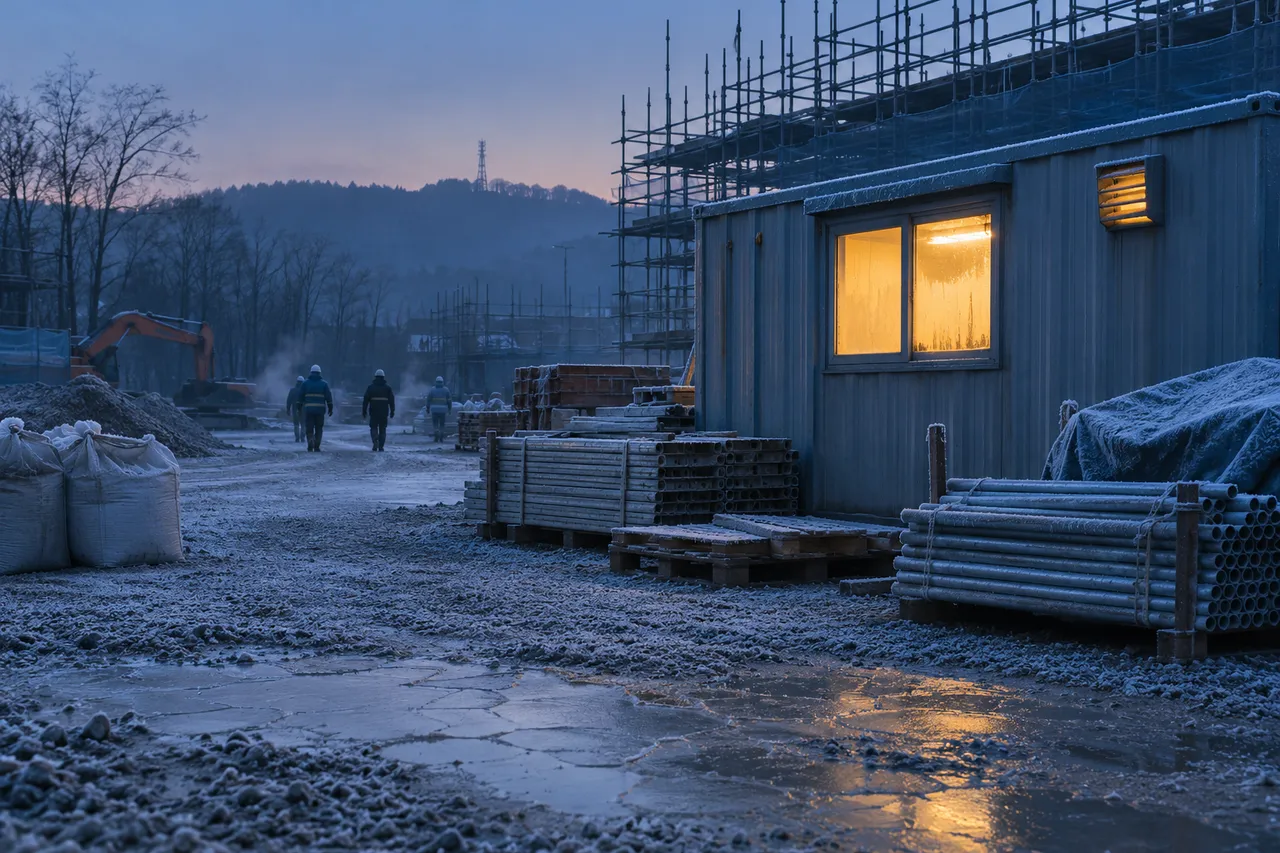
Illustrative image
Cold wave worker safety: the five basics and cold wave alert criteria
Korea's five cold wave safety basics are the rules that the Ministry of Employment and Labor (MOEL) set to prevent cold-related illness among people working where a cold wave alert is in effect. MOEL's material defines a cold wave as a weather phenomenon of cold temperatures that can cause hypothermia, frostbite, chilblains or other health effects in workers, and says that long exposure can cause or worsen these conditions.
| Basic | Details in MOEL's prevention rules |
|---|---|
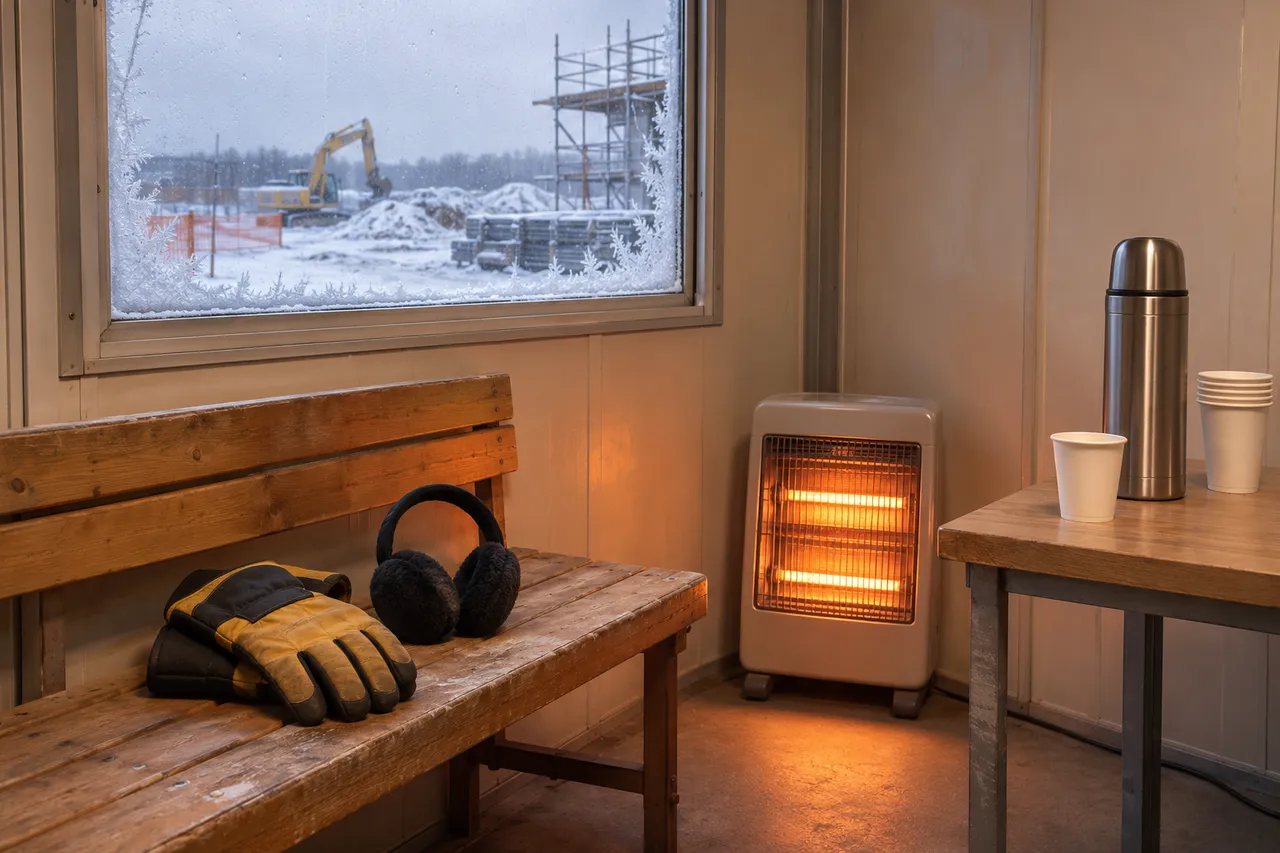
| Warm clothes | Wearing, and instructing workers to wear, insulated clothing, gloves and footwear and a hat that covers the head and ears; spare socks in case they get wet with water or sweat |
| Warm shelter (rest) | A warm shelter close to the work area, fire and toxic gas poisoning prevention in the shelter, adequate rest during a cold wave alert |
| Warm water | Clean, warm water |
| Adjusted work hours | During a cold wave alert, moving work away from the coldest hours (3 a.m. to 9 a.m.) |
| 119 call | Calling 119 at once when a worker has or may have a cold-related illness; telling workers the symptoms, prevention and first aid in advance |
Illustrative image
How far work hours change depends on the level of the cold wave alert. MOEL's prevention rules call for adjusted or shorter work hours under a cold wave advisory, and for stopping or minimizing outdoor work in the coldest hours (early morning) under a cold wave warning. The same material sums up the two levels of the Korea Meteorological Administration (KMA) criteria and refers to the KMA warning criteria for the details.
| Alert | Criteria (morning low) | Work hours |
|---|---|---|
| Cold wave advisory | Expected to stay at or below minus 12°C for two days or more, or expected to drop 10°C or more from the previous day to 3°C or below, among others | Adjusted or shorter work hours |
| Cold wave warning | Expected to stay at or below minus 15°C for two days or more, or expected to drop 15°C or more from the previous day to 3°C or below, among others | Outdoor work stopped or minimized in the coldest hours (early morning) |
MOEL's 2026 cold wave measures: schedule and inspection targets
On November 13, 2026, MOEL announced its cold wave measures to protect workers' health, to run through the government-wide cold wave safety period from November 15, 2026 to March 15, 2027. Citing the KMA outlook, MOEL said the 2026-2027 winter would see large temperature swings, with a chance of steep drops as cold air moves in during January.
| Item | Period | Scope |
|---|---|---|
| Cold wave safety period | November 15, 2026 to March 15, 2027 | Government-wide period for the worker health measures |
| Self-inspection period | November 17 to November 30, 2026 | About 30,000 vulnerable workplaces; cold-related illness hazards and rest facility installation and management standards |
| Inspections in the coldest months | December 2026 to February 2027 | About 4,000 workplaces; compliance with the five basics |
| Focused inspections of vulnerable sectors | Coldest months | 200 construction sites, 200 household waste collection and transport workplaces, 200 farming and livestock workplaces that employ migrant workers |
The roughly 30,000 vulnerable workplaces were chosen from sectors with many cold-related illness claims. Dedicated labor inspectors at regional offices and staff of the Korea Occupational Safety and Health Agency (KOSHA) hand out a prevention guidebook with the five basics before a cold wave alert, and once an alert is issued MOEL sends weather updates, accident cases and prevention steps through its Serious Accident Siren service (90,000 people) and 40 industrial safety signboards. If the crisis alert reaches the Serious level, the head of MOEL's Occupational Safety and Health Headquarters takes charge of a special cold wave response period.
MOEL said focused inspections of construction, household waste collection and transport, and farming and livestock would expand from 200 workplaces in the November 2025 measures to 600. The press release subheading puts the joint inspections of household waste and farming with local governments, part of that total, at 400, up from 200. Construction site inspections check whether early morning work hours are adjusted and also whether winter hazards such as asphyxiation, fire and explosion, falls and collapses are controlled. The background to the fire and explosion checks is in Korea's Winter Fire and Explosion Inspections. Household waste workplaces and farms that employ migrant workers are inspected with local governments, with a focus on work hour adjustment and on heating and fire safety equipment in worker housing.
Cold-related illness claims, winters 2021-2022 to 2025-2026
Cold-related illness claims caused by cold waves totaled 27 over the five winters from 2021-2022 to 2025-2026, with no deaths, according to MOEL. By winter, the counts were 5, 11, 2, 5 and 4.
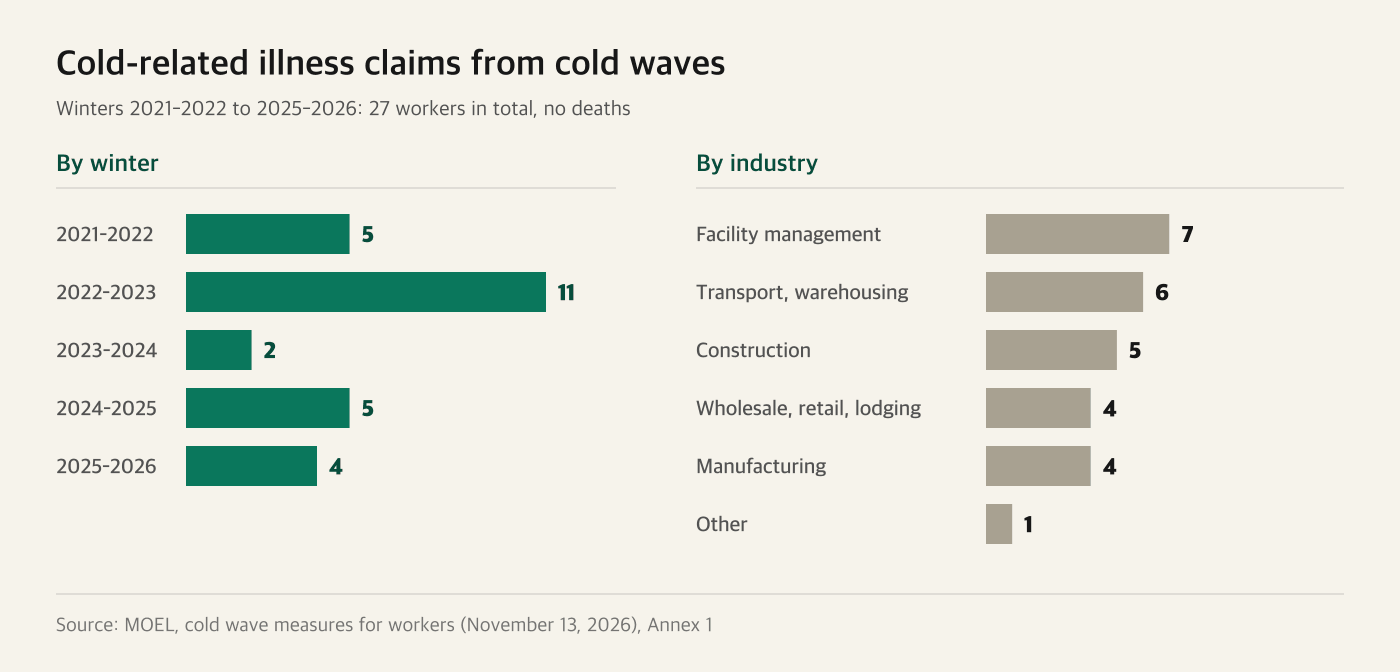
Figure 1. Cold-related illness claims by winter and by industry. Source: MOEL (November 13, 2026).
By industry, facility management accounted for 7, transport and warehousing for 6, construction for 5, wholesale, retail and accommodation for 4, manufacturing for 4 and other industries for 1. By size, 17 (63.0%) occurred at workplaces with fewer than 50 regular workers: 7 (25.9%) under 5, 6 (22.2%) from 5 to under 20 and 4 (14.8%) from 20 to under 50. MOEL focuses its guidance on adjusting work hours in sectors with much early morning outdoor work, such as sanitation, construction and logistics.
Article 563 of the OSH Standards Rules: draft amendment and current text
As of November 19, 2026, the five cold wave safety basics are recommendations, and MOEL is amending the Rules on Occupational Safety and Health Standards (OSH Standards Rules) to make them a health measure that employers must take. The draft was published for comment as MOEL Notice No. 2026-364 from July 14 to August 24, 2026, and its addendum makes it effective on the day of promulgation. On November 19, 2026, the current version of the rules on the National Law Information Center (in force since March 2, 2026) did not yet include the amendment.
Article 563 of the current OSH Standards Rules (prevention of cold-related health problems) covers the cold work defined in Article 559(2): work in places that handle large amounts of liquid air, dry ice and the like, and inside refrigerators, ice-making rooms, ice stores, freezers and similar spaces. The draft adds a definition of a cold wave as Article 558(5) and renames Article 563 to cover cold and cold wave health problems, extending it to outdoor work in areas under a cold wave alert.
| Provision | Current rules (in force March 2, 2026) | Draft (July 14, 2026) |
|---|---|---|
| Article 558 | Definitions of high heat, cold, high humidity and heat wave | New item 5 defining a cold wave |
| Article 563 main text (draft 563(1)) | For cold work: exercise guidance for blood circulation, nutrition guidance on fat and vitamins, warm water, changing wet work clothes at once | Unchanged |
| Article 563(2) | None | For outdoor work in areas under a cold wave alert under Article 13-2(1) of the Weather Act and similar work: advance notice of symptoms, prevention and first aid; instructing workers to wear insulated clothing, gloves, footwear and a hat covering the head and ears; balancing work and rest and adjusting work hours |
| Article 563(3) | None | Reporting without delay to the fire station with jurisdiction over the workplace, directly or by having the worker report, when cold work or cold wave exposure has caused or may have caused a health problem |
Under Article 563(2)3 of the draft, where work hours are hard to adjust, the employer must take steps that reduce the drop in body temperature, such as having workers wear insulated clothing. Apart from cold waves, Article 567(1) of the current rules requires rest facilities for cold work, and Article 572(1)2 requires employers to give winter hats, winter boots, winter gloves and winter clothing to workers who handle large amounts of cold material or work in markedly cold places. Article 39(1)7 of the Occupational Safety and Health Act (OSH Act), the parent law, lists health problems from long work in heat waves or cold waves among the health measures employers must take.
Construction period extensions and safety and health management costs
Article 70(1)1 of the OSH Act, as amended by Act No. 22122 in force since October 27, 2026, names bad weather such as typhoons, floods, heat waves and cold waves as a ground for extending construction periods. When the construction contractor asks for more time to prevent industrial accidents on a project delayed for this reason, the client must extend the period unless there is a special reason not to.
Illustrative image
MOEL tells public clients and builders how to ask for an extension when a cold wave delays work, and that occupational safety and health management costs can pay for shelters, rented heaters, insulated gloves, heated vests and other cold illness prevention equipment and supplies. Construction sites also get technical support on preventing carbon monoxide poisoning (300 sites) and on-site health management services (600 sites).
Support for workers vulnerable to cold waves
MOEL's cold wave measures set out separate support for sanitation workers, migrant workers and mobile workers.
| Group | Support |
|---|---|
| Sanitation workers and others (household waste collection and transport, cleaning, building management) | Guidance on adjusting work hours during cold wave alerts; 14,300 warm kits of gloves, hand warmers and ear warmers; technical support on managing sensitive workers at 1,000 sites |
| Migrant workers | The prevention guidebook in 18 languages, sent to about 10,000 employing workplaces, migrant worker support centers and pre-employment training institutions |
| Mobile workers | Checks on the agreement signed with eight delivery platforms on May 15, 2026; information on 152 rest stops for mobile workers in delivery apps and on the KOSHA website; more rest stops in everyday places such as convenience stores and motorcycle repair shops |
Kim Young-hoon, Minister of Employment and Labor, asked workplaces to move work away from the cold early morning hours when a cold wave alert is issued and to follow the five basics so that workers can rest enough in a warm shelter.
Field checklist
- By November 30, 2026, the end of the self-inspection period for vulnerable workplaces, mark each of the six areas of the MOEL and KOSHA pre-inspection checklist for cold-related illness as adequate or needing improvement.
- Check that workers are told to wear insulated clothing, gloves, footwear and a hat covering the head and ears, and that spare socks are ready in case they get wet.
- Check for a warm shelter close to the work area, fire and toxic gas poisoning prevention in the shelter, and rest facilities that meet the installation and management standards such as size, temperature and location.
- Check that clean, warm water is available during work.
- Decide in advance on adjusted or shorter work hours under a cold wave advisory and on stopping or minimizing early morning outdoor work under a cold wave warning.
- Tell workers the symptoms, prevention and first aid for cold-related illness in advance and share the procedure for calling 119 when a worker has or may have one.
- Designate for close attention during cold wave alerts workers with high blood pressure, diabetes, cardiovascular or cerebrovascular disease or hypothyroidism, older workers, newly assigned workers and workers on heavy tasks such as formwork, rebar and concrete placing.
Summary
As of November 19, 2026, the five cold wave safety basics are recommendations, but MOEL will check compliance with them at about 4,000 workplaces and in 600 focused inspections from December 2026 to February 2027. The first step for a workplace is to use the pre-inspection checklist by November 30, 2026 to settle its shelter, its work hour adjustment criteria and its 119 call procedure.
The draft amendment to Article 563 of the OSH Standards Rules takes effect on the day of promulgation, so check the original text on the National Law Information Center (law.go.kr) for its promulgation and final wording. The summer counterpart is covered in Heat-Work Break Duties by Apparent Temperature.
Official sources
- MOEL, cold wave measures to protect workers' health with focused guidance on adjusting work hours (November 13, 2026, Korean)
- MOEL Notice No. 2026-364, draft partial amendment to the Rules on Occupational Safety and Health Standards (July 14, 2026, Korean)
- National Law Information Center, Occupational Safety and Health Act (Korean)
- National Law Information Center, Rules on Occupational Safety and Health Standards (Korean)