Wind Turbine Maintenance Safety Rules by Task
Wind turbine maintenance safety rules for five tasks are set out in a one-page sheet Korea released on October 22, 2026, for its 141 operating wind farms.
Current as of November 7, 2026.
Illustrative image
Wind turbine maintenance safety sheet: background and recipients
On October 22, 2026, Korea's Ministry of Employment and Labor (MOEL) and the Ministry of Climate, Energy and Environment said they had jointly produced and were distributing a one-page sheet (OPS) titled "Wind power maintenance safety points at a glance". The OPS is a field document that summarizes the key safety rules mainly in pictures and charts. The two ministries prepared it after the Yeongdeok wind farm fire of March 23, 2026, reflecting the nature of maintenance work such as work at height and work in confined spaces and the views of field workers and the industry.
In a press note of March 25, 2026, the Ministry of Climate, Energy and Environment said the Yeongdeok fire is presumed to have started while workers were grinding the blade to repair a defect, and that compliance with safety rules was under investigation. In the same note, Minister Kim Sung-hwan said the ministry would review problems across the turbine maintenance process and prepare measures to strengthen safety management.
The ministries plan to send the OPS to the 141 wind farms in commercial operation and to developers, turbine manufacturers and maintenance contractors, and to post it on the Industrial Safety Portal and the Korea Wind Energy Industry Association website. The OPS cover also carries the names of the Korea Occupational Safety and Health Agency (KOSHA), the Korea Energy Agency and the Korea Electrical Safety Corporation. MOEL said it plans to produce and distribute a more detailed "Renewable energy safe work guide (wind power)", covering offshore wind and installation and dismantling work, in November 2026.
| Part | Contents |
|---|---|
| Main turbine sections and hazards | Hazard points and main tasks for the blades and hub, nacelle, tower interior and tower base |
| Pre-work safety checklist | Six areas (work management, electrical safety, fall prevention, rotating parts, work environment, emergency response) and common precautions |
| Safety by task | Overview, main work, key safety rules, main hazards and required safety measures for each of the five tasks |
| Risk assessment (JSA) example | Six steps of blade maintenance using rope access |
Wind turbine hazards by work location
The ministries note that wind turbine hazards change with the work location, from asphyxiation, falls and caught-in injuries to electric shock, fire, high wind and lightning. Kim Bu-hui, MOEL's Director General for Industrial Safety Prevention Policy, said: "Wind power involves a lot of irregular maintenance work on aging equipment, so it is important to carry out a risk assessment before work, identify the hazards and follow the safety rules."
| Work location | Main work | Hazard points |
|---|---|---|
| Blades and hub | Crack inspection and repair, surface repair, internal inspection, part replacement | Falls during work at height, falling tools and materials, weather such as high wind, fire during work inside the blade |
| Nacelle | Gearbox and generator checks, lubricant changes, oil sampling, converter and other electrical checks, hydraulic system checks | Contact with rotating parts such as bearings and shafts, contact with hot parts such as the gearbox and lubricant, electric shock and fire from electrical equipment |
| Tower interior | Bolt checks on the tower and structures, climbing and moving | Falls from ladders and lifts, workers below struck by falling objects, cramped space, poor lighting |
| Tower base | Checks on electrical equipment such as transformers, distribution boards and breakers | Electric shock, arcs and fire from electrical equipment, confined spaces such as manholes, poor access control |
Illustrative image
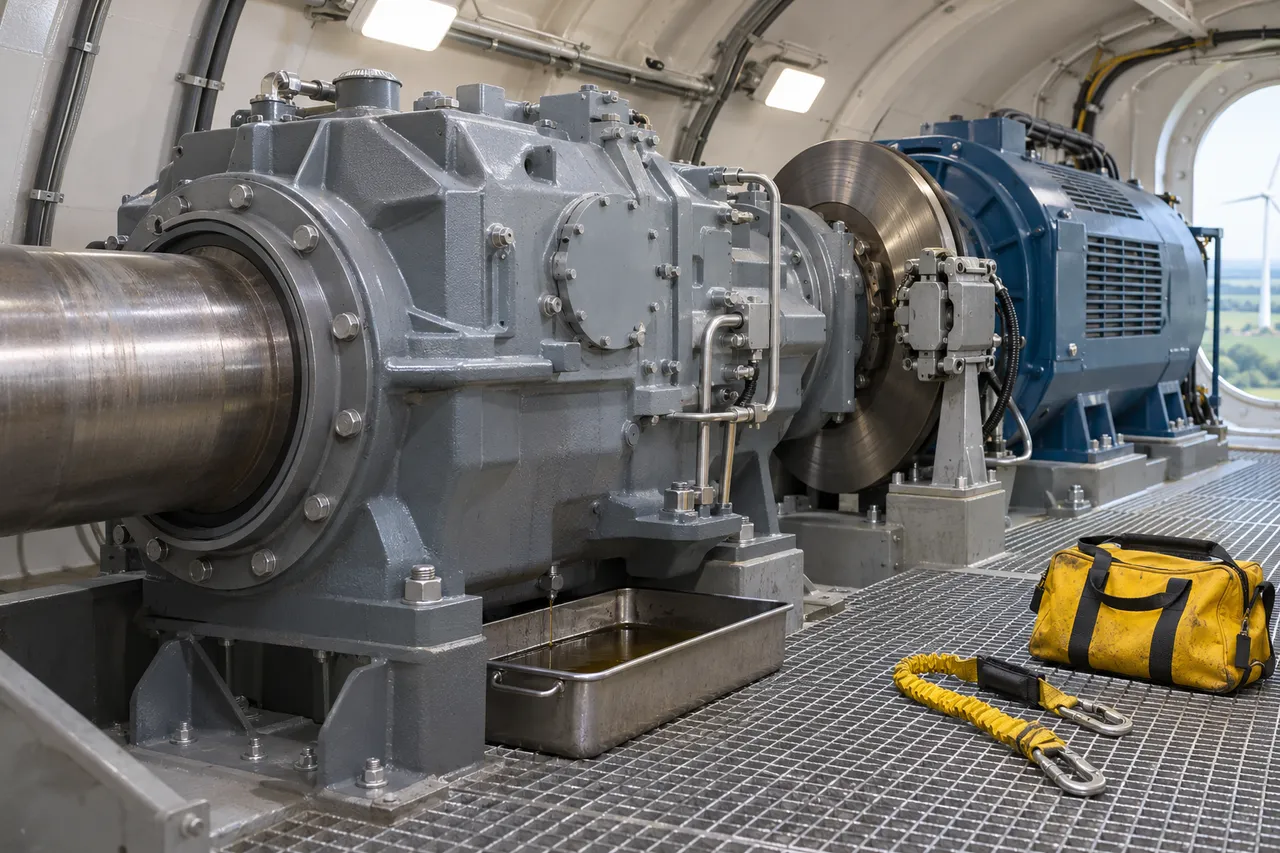
The OPS splits nacelle work into two tasks: drivetrain maintenance and electrical checks. For the drivetrain, the main work listed is checking gearbox oil condition and leaks and changing oil, checking bearing temperature, vibration and noise, checking brake pad wear and operation, and checking lubrication pumps, lines and filters. The electrical task covers inverters, converters, transformers, switchboards, cables and generators.
Key safety rules and required measures for the five tasks
The OPS divides wind turbine maintenance into five tasks (tower base electrical checks, tower climbing and moving at height, nacelle drivetrain maintenance, nacelle electrical checks, and blade and hub maintenance) and sets key safety rules and required safety measures for each.
| Task | Key safety rules | Required safety measures |
|---|---|---|
| Tower base electrical checks | Lockout/tagout (LOTO) and zero-voltage check, check grounding and insulation, wear insulating protective gear, keep out unauthorized people, check transformers for leaks and overheating | LOTO, zero-voltage check, insulating protective gear, ventilation where needed, access control |
| Tower climbing and moving at height | Wear a harness and clip to the lifeline, inspect ladders and lifts before climbing, keep three points of contact, prevent dropped tools with tool bags, no entry below the ladder | Harness worn and attached, three points of contact, dropped-tool prevention, no entry below the lift, descend at once if anything is wrong |
| Nacelle drivetrain maintenance | Stop the rotor fully and apply the brake, check gearbox and drivetrain temperature, check for leaks and remove oil, release lubrication system pressure, refit guards after work | LOTO, brake engagement check, equipment and oil temperature check, proper equipment for heavy loads, clean up leaks to prevent slips |
| Nacelle electrical checks | LOTO and removal of residual energy, zero-voltage check with a voltage detector, automatic extinguishing device installed and checked inside control panels, no operation of switchboards and breakers except by the person in charge, check cooling fans, filters and other auxiliaries | LOTO, zero-voltage check, insulating protective gear, de-energized work procedure, extinguishing equipment in place and tested |
| Blade and hub maintenance | Stop the rotor and lock it mechanically (brake, pin), stop the pitch system and remove residual energy, use a harness with twin lanyards and twin ropes, set and follow a safe working wind speed, stop work in high wind, lightning or rain | Rotor lock, rope and anchor checks, personal protective equipment, access control below, weather monitoring |
All five tasks share a five-step required procedure: the pre-work checklist, a risk assessment by JSA or the frequency and severity method, work permit approval, a toolbox meeting (TBM) with every worker, and work in line with the safety rules. The OPS pre-work checklist is grouped into six areas and includes reviewing and approving the work permit, testing for voltage and removing residual voltage, securing anchor points and completing Global Wind Organisation (GWO) safety training, locking the rotor and preventing restarts, checking the wind speed limit and lightning forecasts, and providing rescue equipment and evacuation and rescue drills.
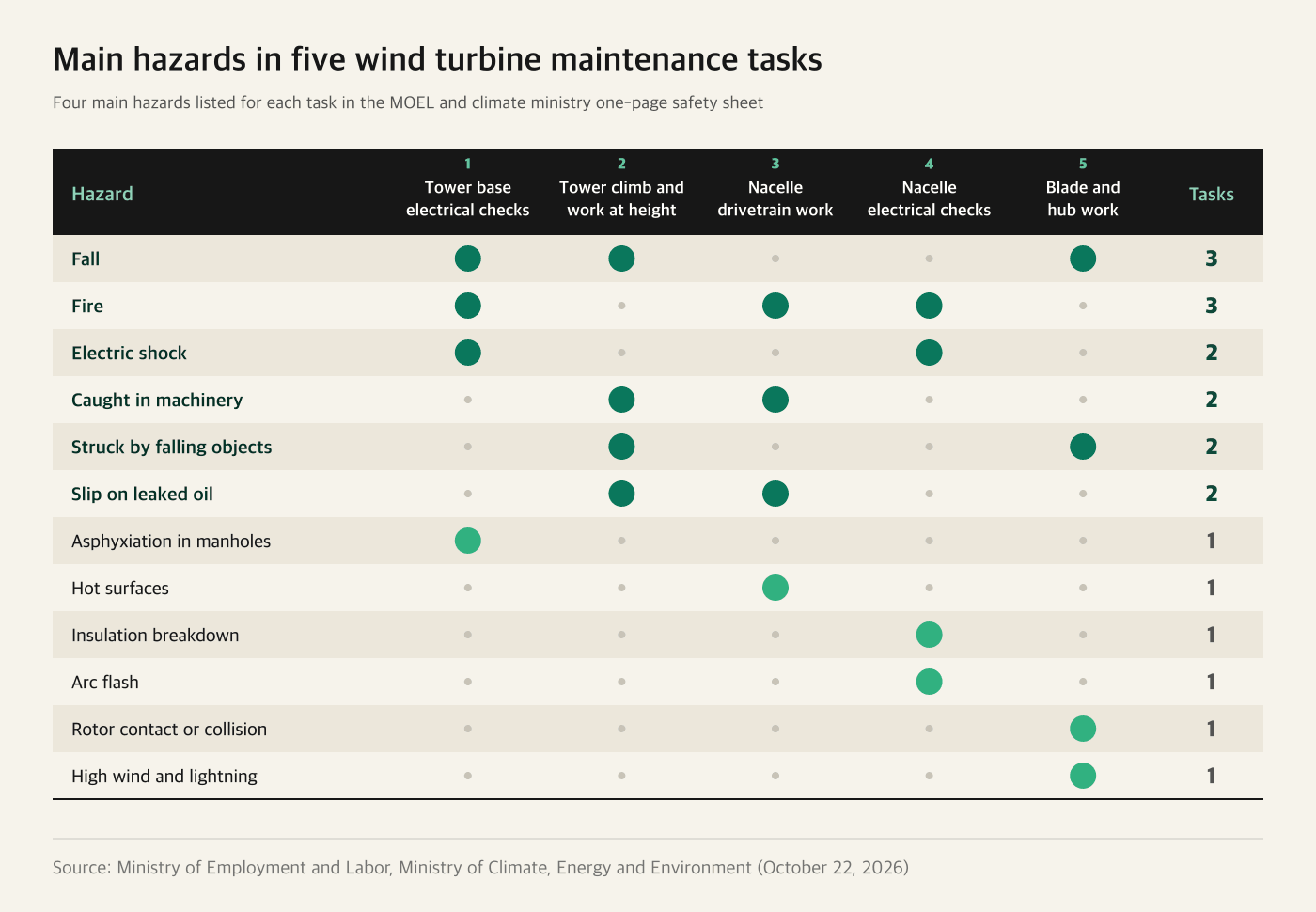
Figure 1. Main hazards in five wind turbine maintenance tasks. Source: Ministry of Employment and Labor, Ministry of Climate, Energy and Environment (October 22, 2026).
Comparing the four main hazards the OPS lists for each task, falls and fire each appear in three of the five tasks. Falls are listed for entering the tower base manhole, climbing the tower and rope work on the blades, and fire for tower base electrical equipment, drivetrain overheating in the nacelle and nacelle electrical equipment. The nacelle electrical task also lists insulation breakdown and arc flash, and the tower base task lists asphyxiation from oxygen deficiency in manholes.
Blade maintenance risk assessment example
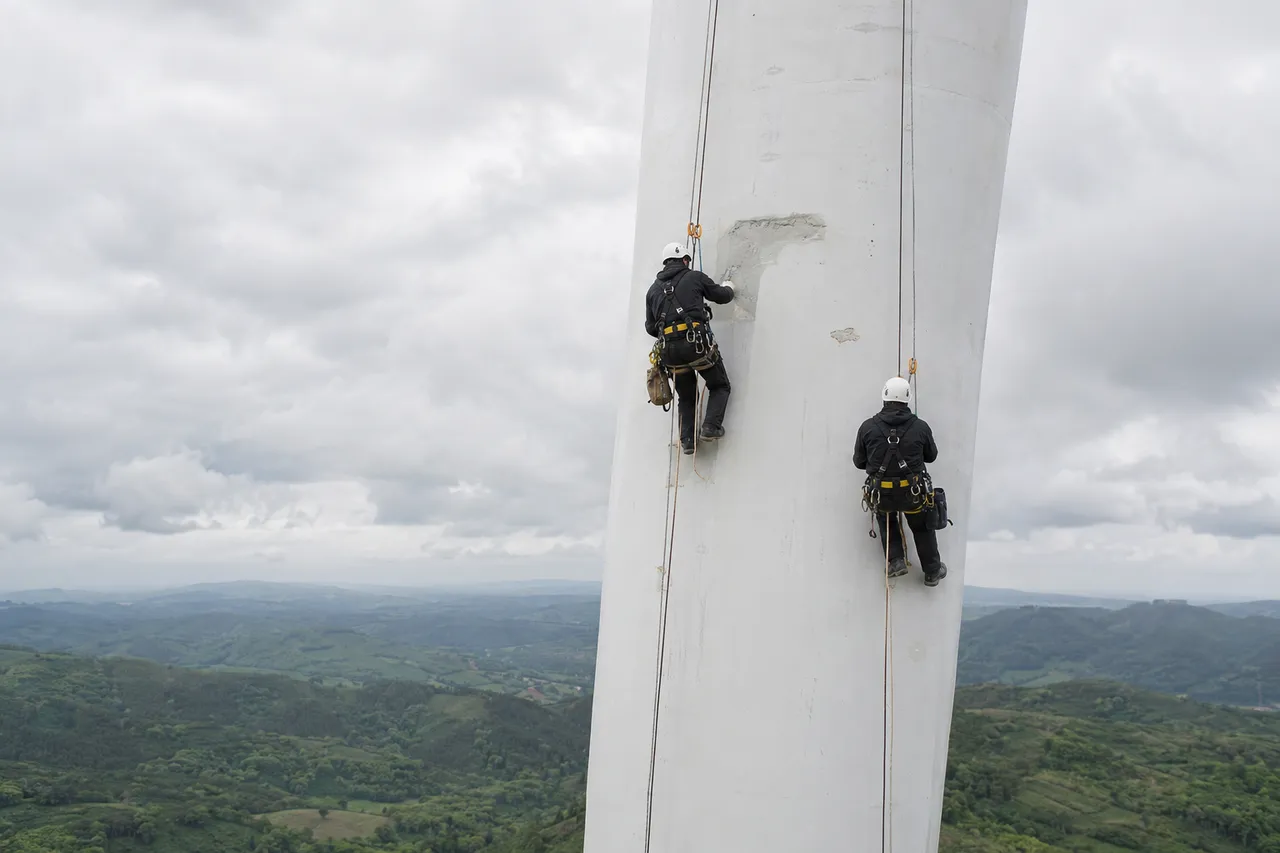
The OPS includes a risk assessment (job safety analysis, JSA) example for blade maintenance, which the ministries describe as irregular maintenance work with a particularly high risk. The example covers inspecting, cleaning, grinding and repairing cracks and delamination on the blade surface by rope access, with the blade stopped and locked in the Y position.
| Step | Work | Hazards | Controls |
|---|---|---|---|
| Preparation and TBM | Work permit, roles, weather and rescue plan check | Hazard information not shared, high wind and lightning, confused roles | Work permit and TBM, wind speed check, emergency contacts and rescue plan shared, rope equipment checked |
| Rotor stop and Y position | Stop the rotor, align the blade in the Y position, stop pitch | Rotor rotation, crushing, pitch malfunction | LOTO, rotor lock, pitch system isolation, brake check |
| Tower climb and nacelle access | Climb inside the tower, reach the nacelle, move to the work area | Falls, slips, dropped tools | Full-body harness, three points of contact, tool lanyards, access control below |
| Rope setup and descent along the blade | Set anchors, rig ropes, descend outside the blade | Rope damage or detachment, falls, wind | Twin ropes, anchor point checks, a work supervisor on site, stop work in bad weather |
| Blade inspection and repair | Surface inspection, cleaning, grinding, resin repair | Fire, struck by falling objects, dust and resin exposure | Remove combustibles and provide extinguishing equipment, ventilation, suitable protective equipment, secure an emergency escape route |
| Finish and return | Retrieve ropes, tools and materials, restore equipment | Falls while dismantling | Checklist, retrieve tools and materials, follow dismantling procedure, confirm completion |
Illustrative image
At the blade inspection and repair step, fire is among the hazards, and the controls include removing combustibles, providing extinguishing equipment and securing an emergency escape route. The OPS sets out the JSA procedure in this order: carry out the risk assessment, share it at the TBM, confirm the safety measures, do the work and check after the work.
Related Korean OSH standards
The OPS safety rules for each task map onto employer duties in Korea's Occupational Safety and Health Act and the Rules on Occupational Safety and Health Standards (OSH Standards Rules). Article 36 of the Act requires employers to carry out a risk assessment, identifying hazards, deciding whether the level of risk is acceptable and putting improvement measures in place, and to record and keep the results.
| Work situation | Provision | Main content |
|---|---|---|
| Drivetrain maintenance and part replacement | OSH Standards Rules Article 92 | Stop powered machinery for maintenance, inspection, repair or replacement, lock the starting device and keep the key separately or post a sign, release compressed gas or liquid in advance |
| Electrical checks | OSH Standards Rules Article 319 | Open disconnectors after isolating the circuit, attach locks and tags, discharge residual charge, confirm with a voltage detector, ground with short-circuit grounding equipment |
| Work in high wind, lightning or rain | OSH Standards Rules Article 37 | Stop work when unstable weather such as rain, snow or wind may put workers at risk |
| Fire-risk work such as blade grinding | OSH Standards Rules Article 241 | Where combustibles are present, set a work procedure, provide protection and extinguishers, prevent sparks from scattering, ventilate, train workers in fire prevention and evacuation |
| Entering the tower base manhole | OSH Standards Rules Article 618 | Safe air: oxygen 18% or more and below 23.5%, carbon dioxide below 1.5%, carbon monoxide below 30 ppm, hydrogen sulfide below 10 ppm |
The locks and signs in Article 92(2) and the locks and tags in Article 319(2) correspond to the LOTO procedure that the OPS makes a required measure in both electrical tasks and the drivetrain task. Article 36(2) of the Act requires employers to involve the workers of the workplace in risk assessment, so it is advisable to prepare the blade JSA with the workers who actually do the rope work.
Field checklist
- Sort the maintenance work on operating turbines into the five OPS tasks and confirm that a risk assessment exists for each.
- Confirm that the work permit is reviewed and approved and that the TBM is held with every worker before work starts.
- Confirm that LOTO, zero-voltage checks with a voltage detector and removal of residual energy before electrical checks are recorded.
- Before nacelle drivetrain work, confirm that the rotor is fully stopped and braked, check gearbox and lubricant temperature and release lubrication system pressure.
- Before climbing the tower, check ladders and lifts, harnesses and lifelines, and anchor points.
- Set a safe working wind speed for blade rope work and share the lightning forecast and bad-weather stop criteria with workers.
- Before blade grinding and resin repair, confirm that combustibles are removed, extinguishing equipment is in place, the area is ventilated and an escape route exists.
- Measure oxygen and hazardous gas levels and control entry before entering the tower base manhole.
Summary
At the core of the wind turbine maintenance safety rules is controlling fall, fire, electric shock and caught-in hazards, which change with the work location, through a pre-work risk assessment, LOTO, rotor locking and weather limits. Wind farm operators and maintenance contractors should compare their work procedures and JSAs against the five OPS tasks and, once it is out, add the contents of the "Renewable energy safe work guide (wind power)" that MOEL said it plans to distribute in November 2026. The original text of the Act and the OSH Standards Rules is available from the National Law Information Center (law.go.kr).
The bearing temperature, vibration and noise checks that the OPS lists for the nacelle drivetrain are made at maintenance visits. Changes in drivetrain condition between visits can be covered by tools such as continuous acoustic and vibration monitoring, an approach described on the industrial equipment monitoring page.
Energy isolation before maintenance and restart checks are covered in the Industry Operations Note post LOTO for Maintenance and Cleaning: Restart Checks, and the risk assessment process in Korean Risk Assessment in 5 Steps: 2026 Guide.
Official sources
- Ministry of Employment and Labor, press release on wind power maintenance safety rules with the OPS attachment (October 22, 2026, Korean)
- Ministry of Climate, Energy and Environment, press note on the minister's visit to the Yeongdeok wind farm accident site (March 25, 2026, Korea.kr, Korean)
- National Law Information Center, Occupational Safety and Health Act (Korean)
- National Law Information Center, Rules on Occupational Safety and Health Standards (Korean)