ESS Container CCTV Rule: Korea's 2027 KEC Plan
Korea plans to drop the ESS container CCTV rule for units with no walkway and a battery management system (BMS), the government said on November 2, 2026.
Current as of November 4, 2026.
Illustrative image
Easing the ESS container CCTV rule in Korea
On November 2, 2026, Korea's Office for Government Policy Coordination (OPC) announced a plan to streamline regulations for the secondary battery industry, including a conditional exemption from the ESS container CCTV requirement. An energy storage system (ESS) is a facility that stores electricity and supplies it when needed. The livelihood subcommittee of the Regulatory Rationalization Committee confirmed 12 improvement tasks on ESS installation, battery recycling and other areas on October 30, 2026, and together with 6 tasks announced first on August 28, 2026, the plan has 18 tasks. A public-private regulatory rationalization team under the Prime Minister identified the tasks and coordinated them with ministries.
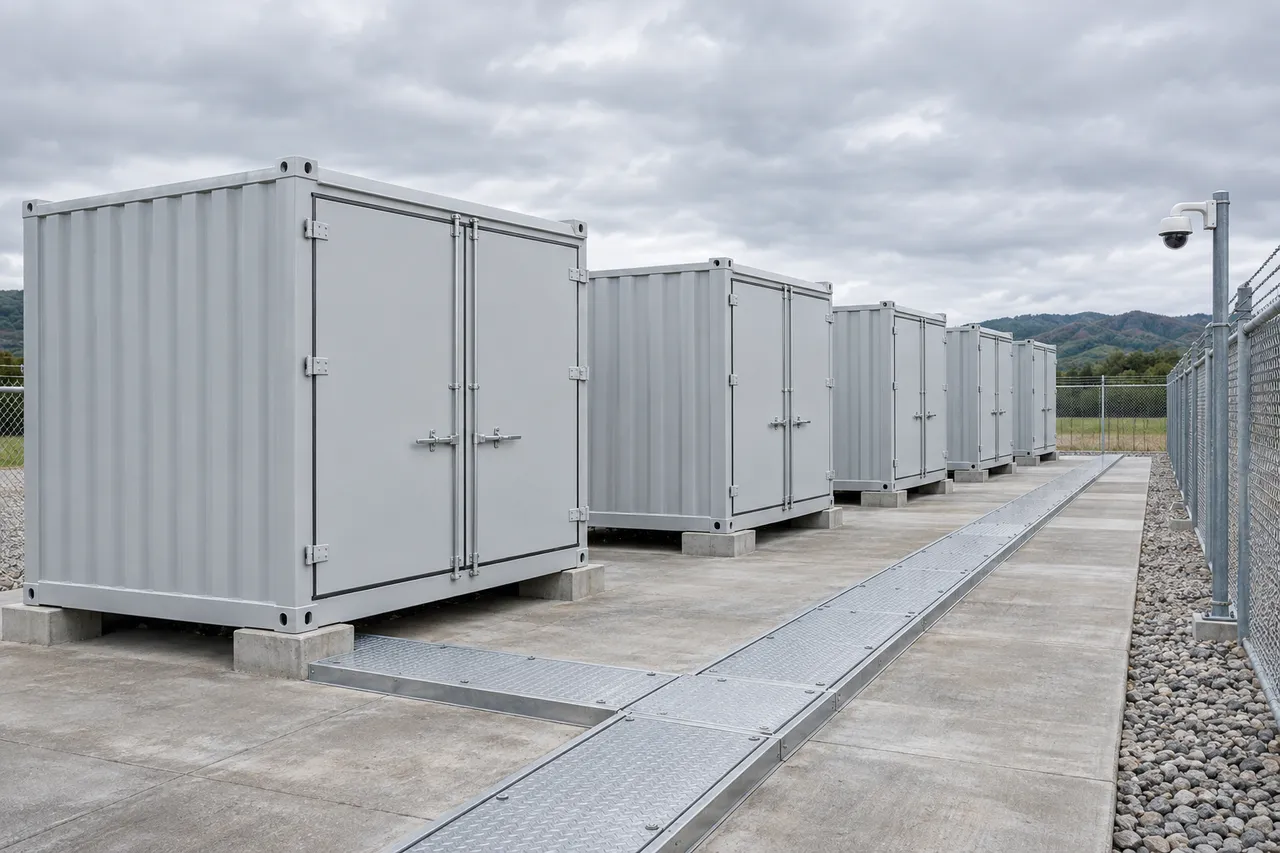
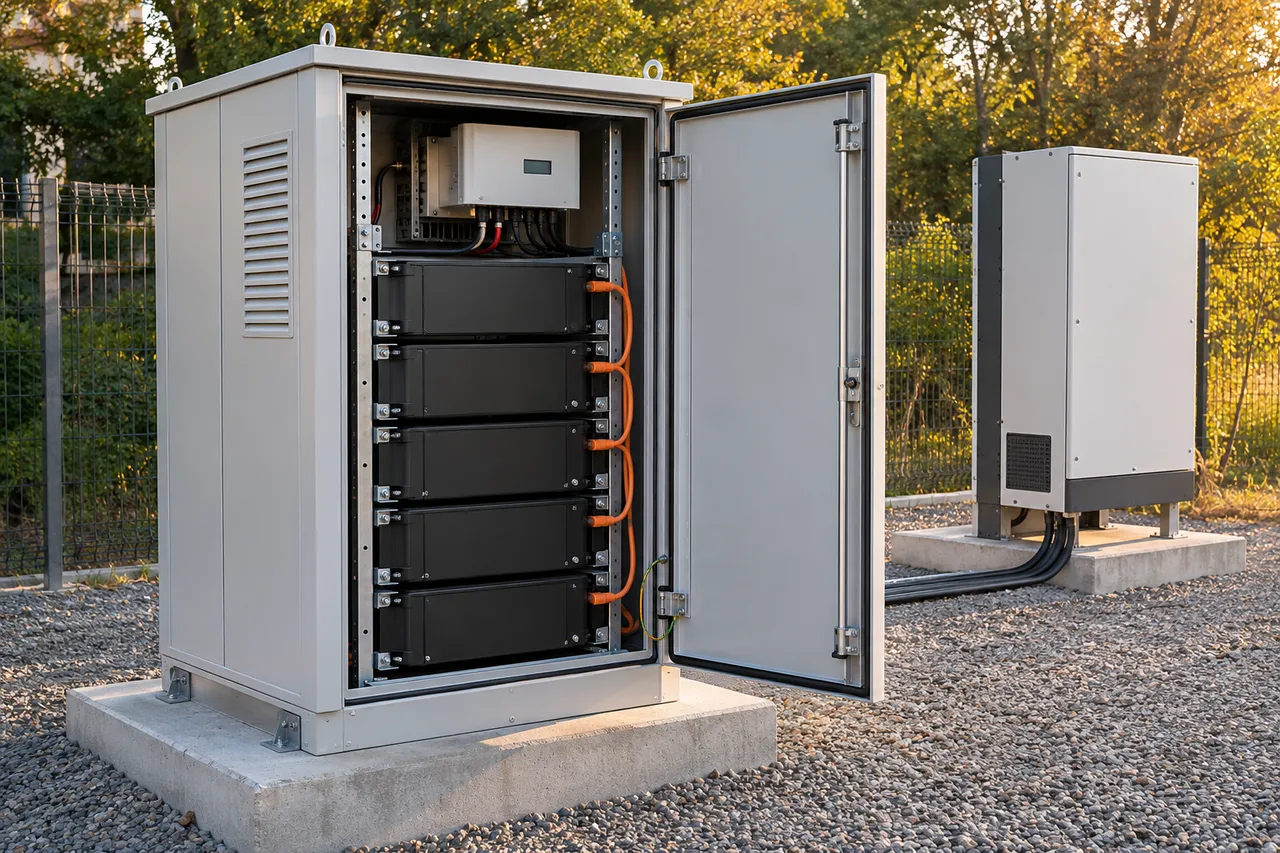
The OPC pointed out that container-type ESS units that people cannot walk into are increasing and that battery management technology such as BMS can manage batteries more effectively than CCTV, yet every container-type ESS must have CCTV installed inside. Under the plan, the CCTV requirement will not apply where the container has no walkway for people and uses battery management technology such as BMS that is more effective than CCTV. The relevant committee will deliberate by the end of 2026, and an amendment to the Korea Electro-technical Code (KEC) will be pursued in 2027 depending on the result. Until the amendment, the current CCTV requirement still applies.
The same plan also covers easing the rule that separates ESS batteries from electrical equipment. The current rule requires electrical equipment such as the power conversion system (PCS) to be installed in a compartment physically separated from the batteries, while products that integrate the PCS with the batteries are being installed abroad. The government is developing technology to install the PCS inside the container, with research and development by the Electrical Safety Research Institute running until 2028. A rule change will be pursued after safety is proven.
| Task | Ministry | Status and schedule |
|---|---|---|
| Rationalize the CCTV requirement inside ESS containers | Ministry of Climate, Energy and Environment | Committee review by end of 2026, KEC amendment pursued in 2027 |
| Ease separate installation of ESS batteries and electrical equipment | Ministry of Climate, Energy and Environment | Electrical Safety Research Institute R&D until 2028, rule change after safety is proven |
| Clarify the legal classification of ESS containers | Ministry of Climate, Energy and Environment; Ministry of Land, Infrastructure and Transport | Guideline distributed October 15, 2026 |
| Set ESS setback distance standards | Ministry of Climate, Energy and Environment | Research study June to November 2026, guide due December 2026 |
| Special lease term for ESS on state and public land | Ministry of Climate, Energy and Environment | Exception planned; current lease term up to 10 years |
| Allow non-resident electrical safety managers for ESS | Ministry of Climate, Energy and Environment | Research study September to November 2026, enforcement rules amendment due first half of 2027 |
| Ease unit capacity limits for container-type ESS | Ministry of Climate, Energy and Environment | Further discussion planned at the next subcommittee meeting |
The electrical safety manager task arises because an outside agency can be appointed as a non-resident electrical safety manager for electrical equipment below 300 kW of generating capacity, but the law sets no clear standard for ESS. The OPC's August 28, 2026 material gave the long operation that ESS projects assume, about 15 years or more, as the basis for the lease term exception.
KEC 512.1.4 monitoring and record rules
The current ESS CCTV requirement comes from KEC 512.1.4, item 3. The current KEC was partly amended by Ministry of Climate, Energy and Environment Notice No. 2025-227 on January 5, 2026, and took effect that day. Section 512.1 applies to energy storage systems using lithium-based or sodium-based secondary batteries above 20 kWh.
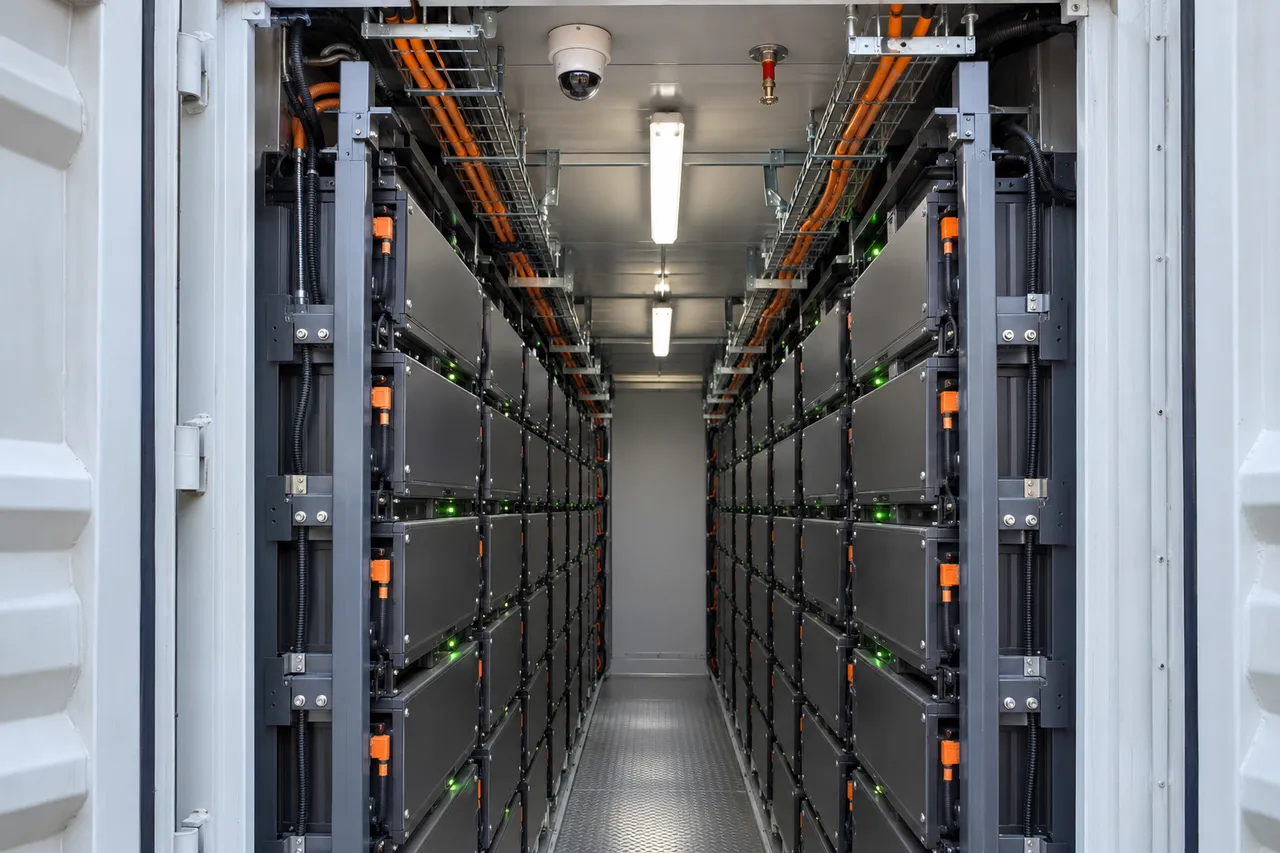
KEC 512.1.4, item 3 requires CCTV that monitors the inside and outside of the place where the batteries are installed with as few blind spots as possible. Item 4 requires the recording times of the system's routine operating data, CCTV footage and emergency measurement data to be synchronized in real time. The data must be sent to a safe place outside the battery room and kept for at least one month, while CCTV footage must be kept for 7 days. After an accident, the data must be shared with the manufacturer, the manager, the owner and the accident investigation body.
Illustrative image
Item 2 requires a facility that alerts the manager to emergencies beyond the manufacturer's ratings, such as overcharge, overdischarge, overvoltage, overcurrent, ground fault current, temperature rise, cooling failure, communication failure and the release of combustible or flammable gas. An emergency stop device that can stop the system automatically and manually is required, and the automatic emergency stop must operate within 5 seconds. The manual emergency stop device must be placed where it can be reached and operated quickly.
The remaining items of the same section require DC surge protective devices (SPD) on DC circuits, measures against communication failure between major equipment, and a ban on charging beyond the maximum range within the rating and on further charging after a full charge. The CCTV requirement is not limited to lithium- and sodium-based systems. Section 512.2 applies the CCTV of 512.1.4, item 3 and at least 7 days of footage storage to lead-, nickel- and vanadium-based battery ESS above 70 kWh, and 512.3.2 applies them to flow battery ESS above 20 kWh.
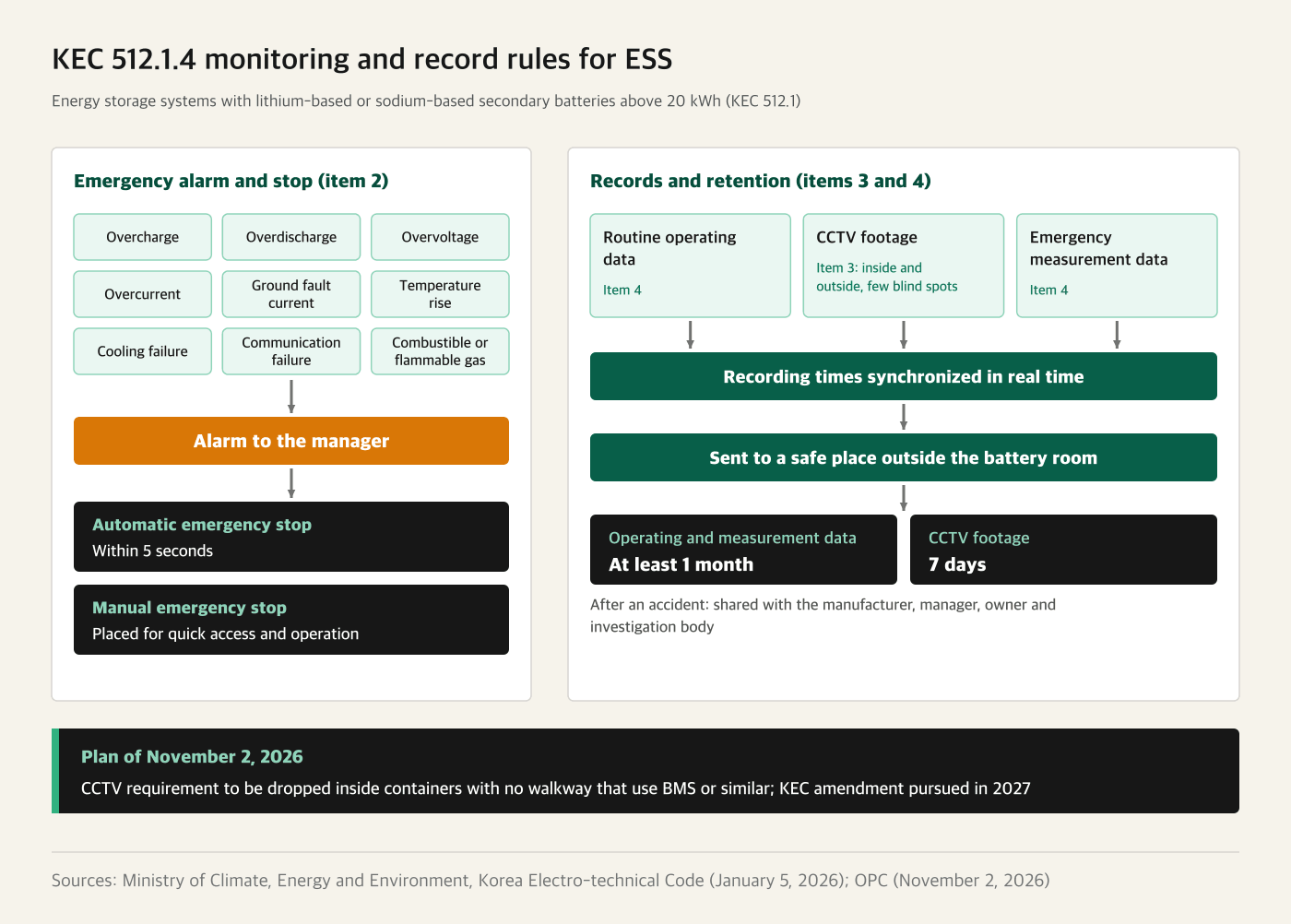
Figure 1. KEC 512.1.4 monitoring and record rules for ESS. Sources: Ministry of Climate, Energy and Environment (January 5, 2026); OPC (November 2, 2026).
Container ESS installation and protection rules
KEC 512.1.5 sets the rules for an ESS installed in a separate place apart from buildings the public enters, including an exception for dedicated outdoor containers and enclosures. Section 512.1.5(c) requires the batteries to be installed in a compartment separated from the PCS and other electrical equipment, called the battery room. This matches the separation rule that the OPC material describes as a target for easing.
| Item | Requirement | Section |
|---|---|---|
| Battery placement | Battery room separated from the PCS and other electrical equipment | 512.1.5(c) |
| Clearance from walls | At least 1 m; for dedicated outdoor containers and enclosures, the manufacturer's distance (area up to 42 m2) | 512.1.5(c)(2) |
| Clearance from surroundings | At least 1.5 m from roads, buildings and combustibles; at least 3 m from entrances and evacuation stairs of other buildings | 512.1.5(f) |
| Fire-resistant partitions | Every 5 MWh of battery capacity or less | 512.1.5(g) |
| Height against flooding | At least 0.3 m above ground; 0.6 m on salt flats and reclaimed land | 512.1.5(c)(5) |
| Thermal runaway and explosion prevention | Rapid air exhaust device; module or rack structure that stops fire spread, or a fire suppression system | 512.1.3 |
Section 511.2.7 sets the protective devices. The system must have a protective device that automatically cuts the circuit on overvoltage, undervoltage or overcurrent, a control device fault, or a rise in the internal temperature of a battery module. The same section requires a power management system that shows the operating state of the PCS, the communication state with the battery management system, and power, current and voltage. Section 511.2.10 requires devices that measure the voltage, current, power and charge state at the battery output terminals and the voltage, current and power of the main transformers.
The OPC plan covers the CCTV requirement; the alarm, emergency stop and data retention rules of 512.1.4 and the protective device rules of 511.2.7 are not on the task list.
Outdoor ESS facility classification guideline
The Ministry of Climate, Energy and Environment, together with the OPC, prepared a facility classification guideline for outdoor energy storage systems and has provided it to local governments nationwide since October 15, 2026. The same type of ESS could be classified as a building, a temporary building or a structure depending on the local government, which changed the permit procedure, time and cost. The ministry set a standard that applies the same way nationwide after consulting the Ministry of Land, Infrastructure and Transport.
The guideline adds whether people can enter, and the facility's structure and use, to Article 2 of the Building Act as criteria. The ministry also provided local permit officers with a decision matrix for the classification.
| Facility type | Condition | Procedure |
|---|---|---|
| Structure | Dedicated protective enclosure that people cannot enter | Structure construction report |
| Temporary building | Container structure people can enter on a limited basis for inspection and maintenance | Temporary building construction report |
| Building | Dedicated ESS building, not a container, that people can enter at any time | Building permit or report |
Illustrative image
According to the ministry's release, permits for an ESS classified as a building take about 2 to 4 months and cost about 30 to 80 million won, while a structure takes about 0.5 to 1.5 months and about 2 to 10 million won. Building standards such as the building coverage ratio and floor area ratio do not apply to structures. The ministry said the guideline can cut permit time by up to 3 months and cost by up to 70 million won.
The guideline covers facility classification only. Local governments separately decide whether a development activity permit is needed, for example for a change in land form. Outdoor ESS installations must comply with the Technical Standards for Electrical Equipment, the KEC, the fire safety technical standard for electricity storage facilities (NFTC 607) and other laws.
Field checklist
- Check the battery type and capacity of each ESS in operation and decide which of KEC 512.1, 512.2 and 512.3 applies.
- Check that CCTV covers the inside and outside of the battery installation with as few blind spots as possible.
- Check that the recording times of operating data, CCTV footage and emergency measurement data are synchronized in real time.
- Check that operating and measurement data are kept for at least one month in a safe place outside the battery room and CCTV footage for 7 days.
- Test that manager alarms work for overcharge, overdischarge, temperature rise, cooling failure, communication failure and flammable gas.
- Check that the automatic emergency stop operates within 5 seconds and that the manual emergency stop device can be reached quickly.
- Compare clearances from surroundings, fire-resistant partition units and height against flooding between drawings and the site.
- For a new outdoor ESS, decide the facility type and permit procedure by whether people can enter and by the structure.
Summary
Easing the ESS container CCTV rule shifts monitoring in containers with no walkway for people from CCTV to battery management technology such as BMS. The KEC amendment is planned for 2027, so sites that run ESS should keep checking the current CCTV, alarm, emergency stop and record rules of 512.1.4. The KEC text is available from the National Law Information Center (law.go.kr).
Battery condition monitoring of an ESS can be supplemented by tools that detect changes before thermal runaway from other signals, such as sound, alongside BMS measurements. This kind of detection is described on the battery fire early warning page.
Battery room separation rules for computer facilities that use lithium batteries are covered in the Industry Operations Note UPS Battery Rooms After the NIRS Data Center Fire.
Official sources
- OPC, press release on streamlining regulations for the secondary battery industry (November 2, 2026, Korea.kr)
- Ministry of Climate, Energy and Environment, press release on unified ESS facility classification (October 15, 2026, Korea.kr)
- OPC, press release on the Prime Minister's regulatory meeting with business groups (August 28, 2026, Korea.kr)
- National Law Information Center, Korea Electro-technical Code