
Korea's Semiconductor Plant Inspection Finds 338 Violations, from Safety Valves to Gas Detectors
Workplace Safety Field Guide special edition: results of the semiconductor manufacturing inspection
On September 20, 2026, Korea's Ministry of Employment and Labor (MOEL) published the results of a focused inspection of 27 semiconductor manufacturing sites. The inspection found 338 violations of the Occupational Safety and Health Act, including fire, explosion and leak hazards such as shut-off valves installed before and after safety valves, non-explosion-proof electrical equipment and missing gas detectors.
This article was written against MOEL's press release "Results of the focused inspection of semiconductor manufacturing" (September 20, 2026) and its attachments, and the current Occupational Safety and Health Act and Rules on Occupational Safety and Health Standards on the National Law Information Center, as published as of September 30, 2026. Criminal referrals and some corrective orders were still planned at the time of the release.
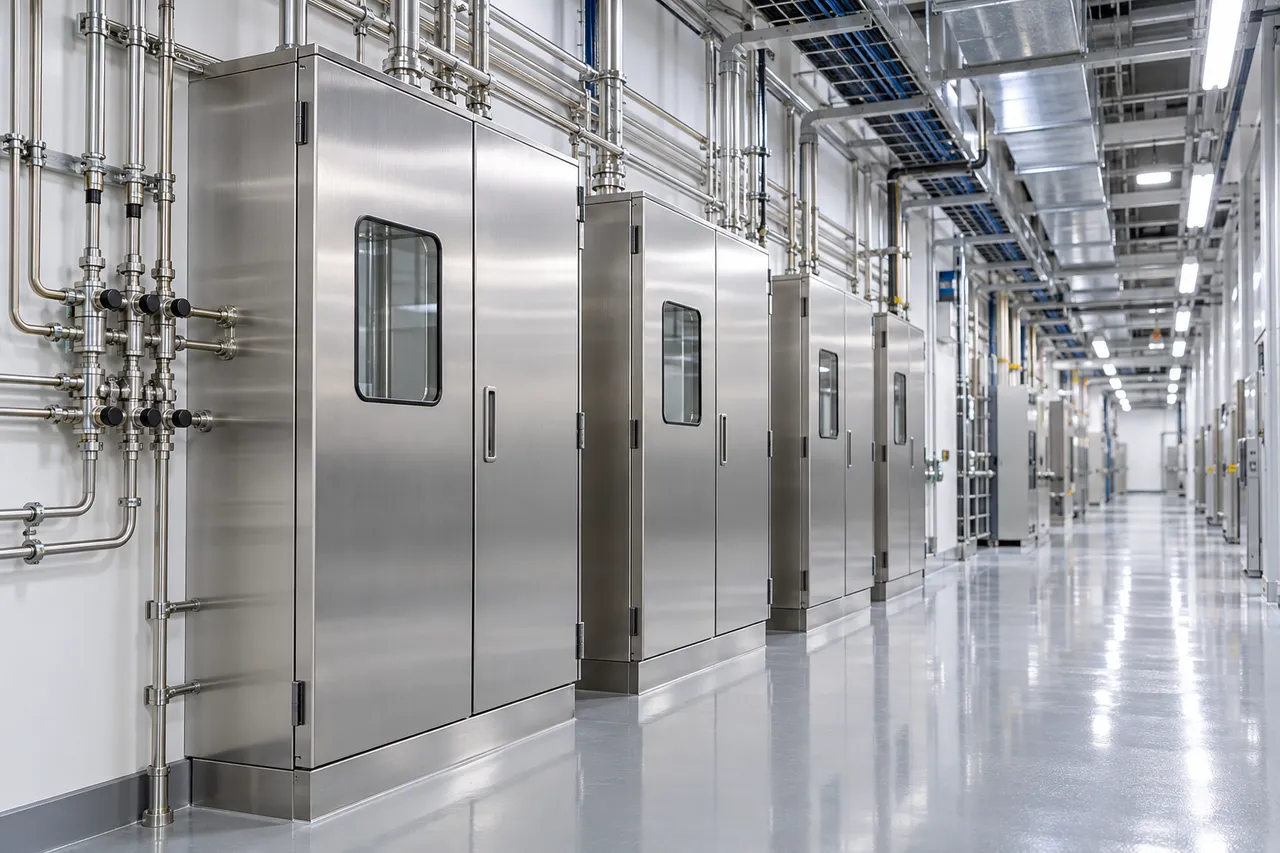
An illustrative image of gas supply equipment in the utility area of a semiconductor plant. It was not taken at any inspected site and does not show any specific equipment.
Inspection overview
From June 26 to September 18, 2026, MOEL inspected 27 semiconductor manufacturing sites, including SK hynix's Cheongju campus, where a series of fluorine leaks occurred in June 2026. Two leak and fire accidents occurred at the Cheongju campus in June. The Cheongju campus was covered by a formal labor inspection, and the other 26 sites by a compliance check (MOEL press release).
MOEL describes semiconductor manufacturing as a high-risk industry because it handles hazardous chemicals and high-pressure gases that can cause large-scale harm through fires, explosions and leaks. The 338 violations led to 28 criminal referrals, 120 administrative fines (KRW 112 million), 188 corrective orders and 2 other measures. The other two are one revoked subcontracting approval and one order to stop using equipment.
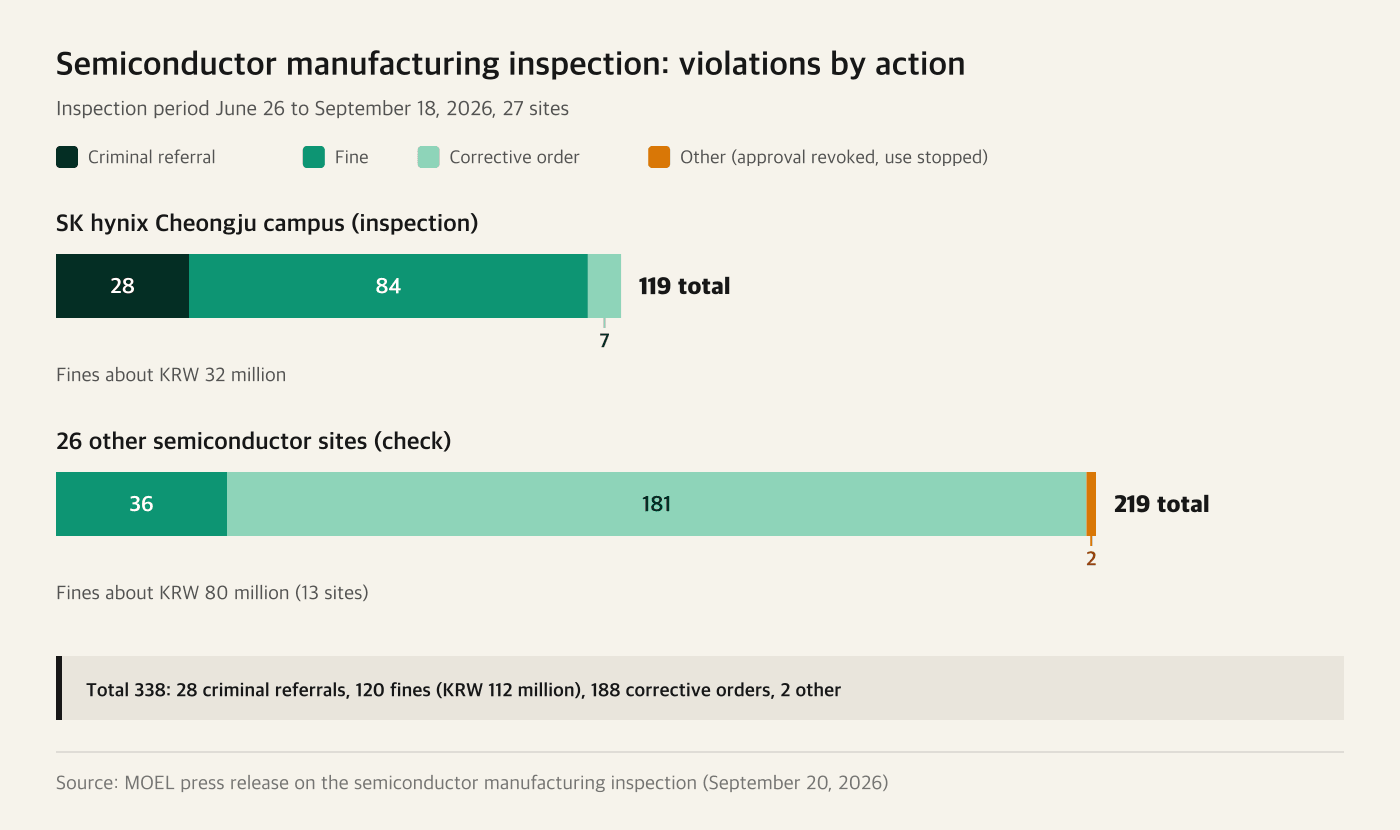
Figure 1. Violations found in the semiconductor manufacturing inspection, by site group and action. Source: MOEL press release (September 20, 2026).
Cheongju campus inspection results
The inspection of the Cheongju campus found 119 violations of the Occupational Safety and Health Act. MOEL said it plans to refer 28 violations of the Rules on Occupational Safety and Health Standards (the Safety Rules) for prosecution. Fines cover 84 violations and total about KRW 32 million; the grounds include missing warning labels and material safety data sheets (MSDS) that were not posted.
MOEL confirmed that the fire and explosion in June resulted from improper implementation of the process safety report. The improper implementation consisted of skipping the pre-work checks the report requires and starting gas work without a safe work permit although the work required one. Separately, MOEL plans to issue corrective orders for 7 items where the process safety report needs to be supplemented.
Article 44 of the Occupational Safety and Health Act requires an employer with hazardous and dangerous equipment specified by presidential decree to prepare and submit a process safety report and have it reviewed. Article 46 requires employers and workers to follow the reviewed report, and requires the employer to have its implementation checked by the Minister of Employment and Labor. At the Cheongju campus, the accident occurred while a process safety report was in place but the pre-work checks and work permit procedure it requires were not carried out. What a process safety report contains is covered in the field-guide special edition Korea's Draft OSH Decree.
Fire and explosion violations and the rules behind them
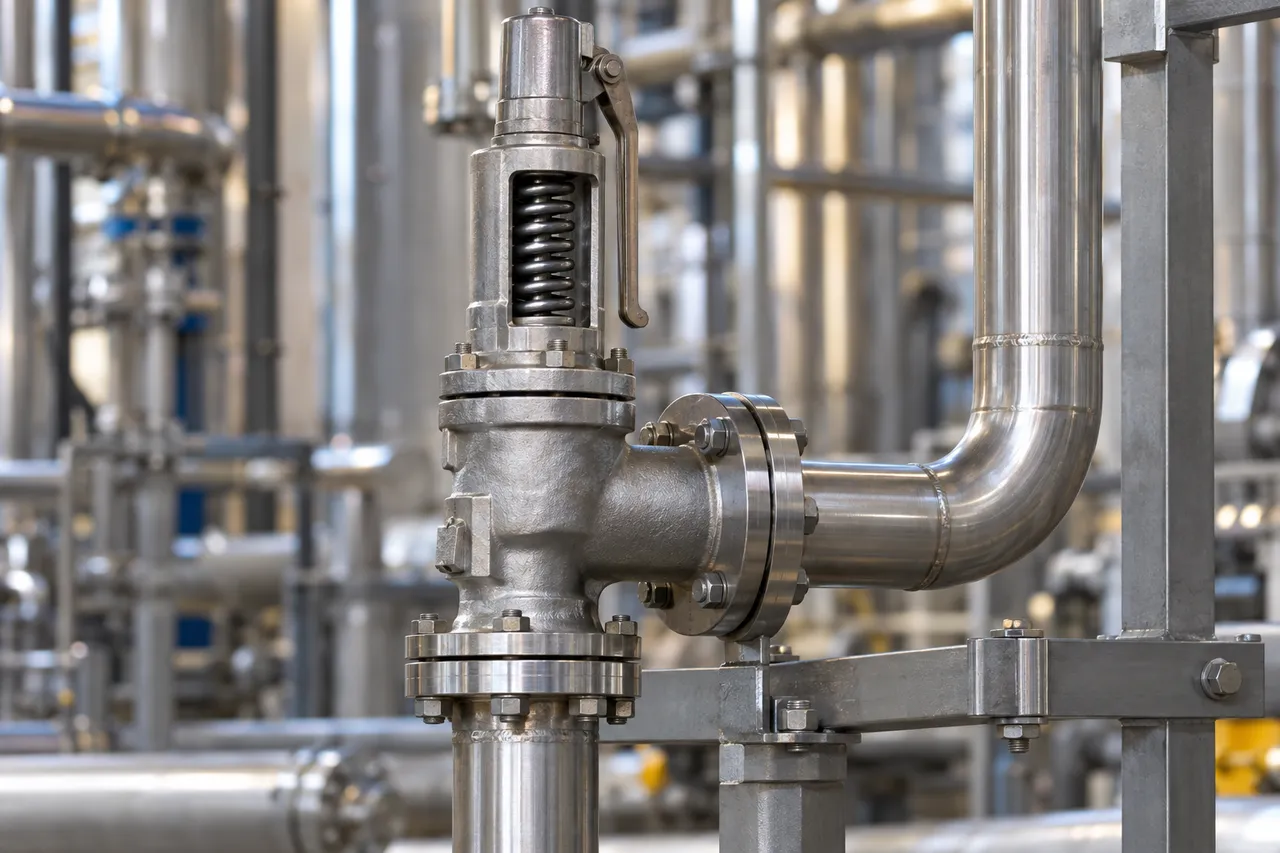
An illustrative image of a safety valve installed on chemical piping. It does not show equipment from any inspected site.
In the release's table of violations, three cases list explosion or fire as the hazard. The first is a shut-off valve installed upstream or downstream of a safety valve. Article 266 of the Safety Rules prohibits shut-off valves before and after safety valves and allows a locking-type shut-off valve, or an equivalent type, only in the six cases the article lists. MOEL explains that installing a shut-off valve keeps the safety valve from relieving pressure in an emergency, so the equipment can explode from overpressure.
The second is the use of electrical equipment without explosion protection in a hazardous area. Article 311 requires employers to select and use explosion-proof electrical equipment that meets the Korean Industrial Standards for gas or dust explosion hazard areas, and to maintain it so that its protection always works. A spark where flammable gas is present can cause an instant explosion or fire.
The third is a flame arrester that does not meet the standard. Article 269, subject to the exceptions in its proviso, requires a flame arrester at the top of chemical equipment that stores or handles flammable liquids or gases and vents vapor or gas to the atmosphere, and requires the arrester to meet the Korean Industrial Standards and be kept in repair. A substandard arrester can let a flame travel back into a flammable liquid tank and cause the tank to explode.
Leak violations and the rules behind them
The check of the 26 sites found 181 violations of the Safety Rules, which were ordered corrected. The leak-related cases were a sulfuric acid pipe without an end cap, valves without an open and close direction marking, and missing gas detectors. An end cap is a plug that seals the end of a pipe.
The release classifies the missing end cap as a violation of Article 257 and explains that sulfuric acid gas could leak if the main valve failed. Article 257 requires suitable gaskets and tight joint faces, among other leak prevention measures, at the covers, flanges, valves and cocks of chemical equipment and piping. Article 258 requires valves, cocks and the switches and push buttons that operate them to show their open and close direction by color or similar means. The release explains that without that marking, workers do not know which way to turn a valve in an emergency, and a delayed shut-off can let toxic gas leak.
The missing gas detectors were classified under Article 299. Article 299 sets seven measures to prevent leaks of acutely toxic substances, including equipment that can detect and alarm on a release to the outside (item 7). The same article requires connections on the equipment to be checked at least once a month (item 2) and an alarm near workers so they can tell when the equipment stops (item 6). Oxygen and toxic gas measurement in confined spaces is covered in the field-guide special edition Confined Space Gas Testing in Korea.
The 26 sites also had many cases of inadequate fall, electric shock and caught-in protection, and of missing signs for confined-space work.
Warning labels, MSDS and washing facilities
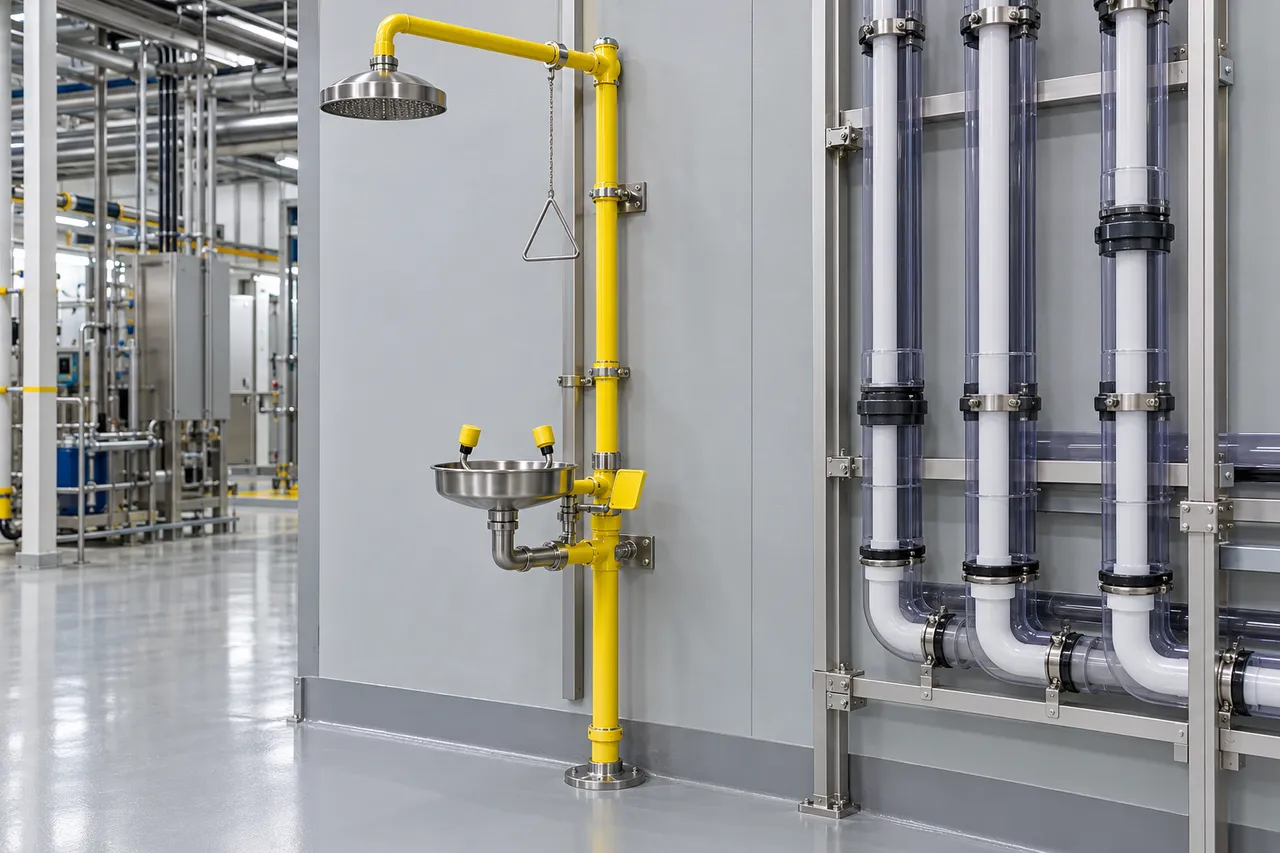
An illustrative image of emergency washing equipment in a chemical handling area. It was not taken at any inspected site.
Missing warning labels and unposted MSDS were grounds for fines both in the Cheongju campus inspection and in the check of the other 26 sites. At the 26 sites, fines cover 36 violations at 13 sites and total about KRW 80 million, including missing warning signs where hazardous materials are handled and unposted MSDS.
Article 37 of the Occupational Safety and Health Act requires safety and health signs, including warnings about hazardous places, facilities and substances, to be installed or attached where workers can easily see them. Employers of foreign workers must prepare the signs in those workers' native languages. Article 114 requires MSDS to be posted or kept where workers handling the substance can easily see them in the workplace, requires handling instructions to be posted for each work process, and requires workers to be trained. MOEL explains that without a posted MSDS, workers do not know the response procedure in an exposure incident, so the initial response is delayed and secondary harm can grow.
The listed violations also included a missing washing facility. Article 451(3) of the Safety Rules requires a washing facility that allows immediate rinsing with water wherever a controlled hazardous substance could come into direct contact with a worker's skin or eyes.
Subcontracting approval and safety inspection
At SK hynix's Icheon campus, MOEL found that the work procedure for approved subcontracted work was not followed and revoked the subcontracting approval. An accident in which workers came into contact with waste nitric acid had occurred at the Icheon campus. The measures at Icheon were 39 corrective instructions, 1 revoked subcontracting approval and 8 fines (KRW 27.7 million).
Article 59 of the Occupational Safety and Health Act requires an employer to obtain the Minister's approval before subcontracting work specified by presidential decree, such as handling substances with acute toxicity or skin corrosivity. The release gives work with hydrofluoric, sulfuric, hydrochloric and nitric acid as examples. In addition, an industrial lift that had not passed its safety inspection was found at one site (site A), and MOEL ordered it out of use.
Hazardous substances in semiconductor processes
The release attachment divides semiconductor manufacturing into wafer manufacturing, front-end processing (wafer fabrication) and back-end processing (packaging and testing), and says hazardous substances are used mainly in cleaning and etching. All 11 substances listed in the attachment are marked as controlled hazardous substances subject to workplace environment monitoring and special health examinations.
| Substance | Main use | Subcontracting approval | Process safety management threshold (manufacture, handling, storage) |
|---|---|---|---|
| Hydrofluoric acid | Oxide removal, wafer cleaning | Yes | 10% by weight or more, 10,000 kg or more |
| Sulfuric acid | Wafer cleaning | Yes | 20% by weight or more, 20,000 kg or more |
| Hydrochloric acid | Wafer cleaning, metal impurity removal | Yes | 20% by weight or more, 20,000 kg or more |
| Nitric acid | Cleaning, metal removal | Yes | 94.5% by weight or more, 50,000 kg or more |
| Fluorine | Dry etching, chamber cleaning | No | 500 kg or more |
| Phosphine | Ion implantation, doping | No | 500 kg or more |
| Chlorine | Dry etching | No | 1,500 kg or more |
| Hydrogen peroxide | Wafer cleaning | No | 52% by weight or more, 10,000 kg or more |
| Ammonium hydroxide | Wafer cleaning | No | 20% by weight or more, 50,000 kg or more |
| IPA | Drying and cleaning, equipment and parts cleaning | No | Manufacture and handling 5,000 kg or more, storage 200,000 kg or more |
| Arsine | Ion implantation, doping | No | Not covered |
Attachment 1 of the release (fire, explosion and leak OPS) lists two recent fire and explosion accidents: a reactor explosion at an inorganic chemical manufacturer in Gimcheon, North Gyeongsang, in July 2026 (2 injured), and a fire and explosion at an oil and fat manufacturer in Cheonan, South Chungcheong, in August 2026 (3 dead, 1 injured). The prevention rules in the same attachment include installing and maintaining safety valves to prevent overpressure explosions, installing and maintaining instrumentation, alarms and emergency shut-off devices to catch abnormal reactions, and measuring gas concentrations and ventilating when handling flammable liquids and gases.
Field checklist
- Check whether any safety valve has a shut-off valve before or after it, and if so, whether it falls under one of the six exceptions in Article 266 and is a locking type.
- List the electrical equipment in areas classified as gas explosion hazard areas and compare it with explosion-proof requirements and maintenance records.
- Confirm that flame arresters on atmospheric vents of flammable liquid and gas equipment meet the Korean Industrial Standards.
- Inspect pipe end closures, joint gaskets and valve direction markings on chemical equipment piping, and confirm that connections on acutely toxic substance equipment are checked at least once a month.
- Confirm leak detection and alarm equipment in every area that handles acutely toxic substances, and an equipment-stop alarm near workers.
- Check warning labels and MSDS locations wherever hazardous materials are handled, and provide signs in native languages if you employ foreign workers.
- Confirm that washing facilities exist and are usable immediately wherever controlled hazardous substances could reach workers' skin or eyes.
- If you subcontract work with hydrofluoric, sulfuric, hydrochloric or nitric acid, compare the approved work procedure with how the work is actually done.
- If your site is subject to process safety reporting, check the records of pre-work checks and safe work permits for gas work.
Summary
The focused inspection of 27 semiconductor manufacturing sites found 338 violations, and the fire and explosion at the Cheongju campus in June was confirmed to have resulted from skipping the pre-work checks and safe work permits required by the process safety report. MOEL plans to share the violation cases through industry associations and to encourage sites that were not inspected to identify and fix hazards themselves. Sites that handle chemicals and high-pressure gases can scope their own checks by comparing their equipment with the violation table in the release. Check the current text of the cited provisions on the National Law Information Center (law.go.kr).
The rise in fire and explosion deaths in the first half of 2026 is covered in the field-guide special edition Korea's H1 2026 Workplace Fatalities.