설비 모니터링 PoC를 운영으로 전환하려면 알림 확인과 현장 점검 절차를 마련하고 센서와 시스템을 관리할 운영 담당자를 지정해야 합니다. 기술 검증을 마쳐도 이 절차와 담당자가 없으면 결과를 현장 업무에 반영하기 어렵습니다. 2019년 ASME 소위원회 백서(NIST 연구진 참여)는 사용 사례를 먼저 결정하도록…
{"blogList":{"posts":[{"id":15,"slug":"industrial-monitoring-poc-to-operations","title_ko":"설비 모니터링 PoC, 운영 전에 정해야 할 것","title_en":"Industrial Monitoring: From PoC to Operations","tags_ko":"[\"설비 모니터링\",\"PoC\",\"상태감시\"]","tags_en":"[\"Industrial monitoring\",\"PoC\",\"Condition monitoring\"]","category":"blog","post_language":"ko","i18n_enabled":1,"publication_status":"published","visibility":"public","published_at":"2026-07-12 09:57:11","is_pinned":0,"created_at":"2026-07-12 08:30:41","updated_at":"2026-10-20 02:47:38","content_snippet_ko":"*산업 운영 노트 6/6: PoC에서 운영으로*\n\n설비 모니터링 PoC를 운영으로 전환하려면 알림 확인과 현장 점검 절차를 마련하고 센서와 시스템을 관리할 운영 담당자를 지정해야 합니다. 기술 검증을 마쳐도 이 절차와 담당자가 없으면 결과를 현장 업무에 반영하기 어렵습니다.\n\n2019년 ASME 소위원회 백서(NIST 연구진 참여)는 사용 사례를 먼저 결정하도록 제안합니다. 백서의 절차에서는 안전, 환경, 비용, 운영 개선 가운데 목표를 선택하고 현재 정비 방식과 상태감시 준비 수준을 기준선으로 기록합니다. 이 기준선이 있으면 PoC의 모델 점수와 정비 판단의 실제 변화를 함께 평가할 수 있습니다.\n\n\n\n*자료화면*\n\n## 사용 사례의 한 문장 정의\n\n사용 사례에는 대상 설비와 관찰할 상태 변화, 결과에 따른 정비 결정을 적습니다. 설비 이상 감지처럼 범위가 넓으면 필요한 데이터와 완료 기준을 정할 수 없습니다. 어떤 변화가 나타났을 때 누가 현장 점검에 착수하는지 한 문장으로 구체화합니다.\n\n안전 정지나 생산 변경은 별개 문제입니다. PoC 시스템이 알림을 보냈다는 이유로 기존 권한과 승인 절차를 생략해서는 안 됩니다.\n\n## 현재 방식의 기록\n\nPoC에 착수하기 전에 대상 설비의 점검 시점과 고장 대응 담당자, 정비 결과의 보관 위치를 기록합니다. 이 기준선과 비교하면 모니터링 도입으로 실제 업무가 달라졌는지 확인할 수 있습니다.\n\n설비 식별자를 일관되게 사용하는지, 센서 위치와 운전 조건을 기록할 수 있는지, 신호를 정비 이력과 연결할 수 있는지 확인합니다. 자료가 흩어져 있으면 PoC에서 먼저 정리할 항목을 정합니다.\n\n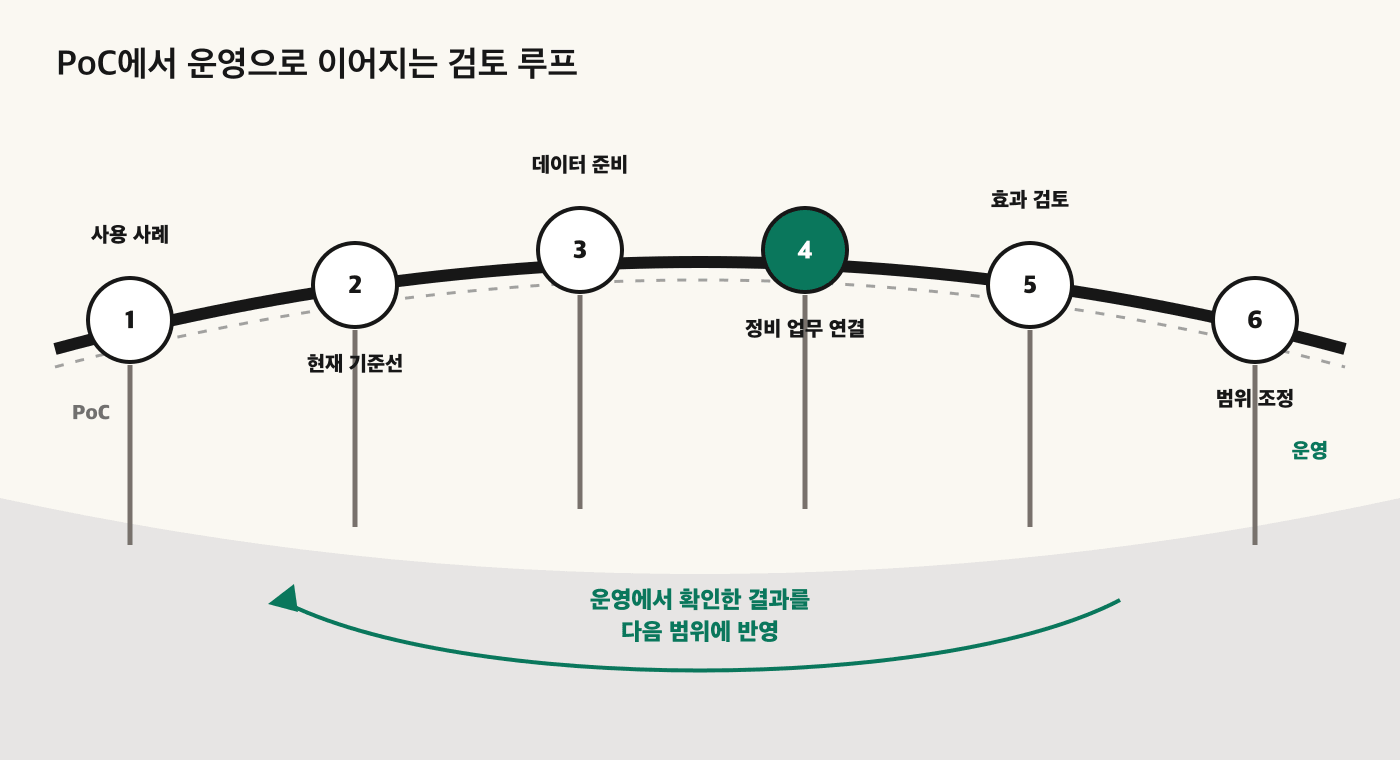\n\n*그림 1. 사용 사례와 기준선 설정, 정비 업무 연계, 효과 검토로 이어지는 운영 전환 과정*\n\n## 알림 후 점검 및 조치 절차\n\n\n\n*자료화면*\n\n담당자가 알림의 신호와 운전 상태를 확인하고, 필요하면 현장 점검에 착수하거나 작업지시를 등록하는 절차를 미리 마련합니다. 점검과 작업지시의 결과를 모니터링 기록에 연결하는 방법도 함께 정합니다.\n\n메신저 알림 외에 담당자 부재 시의 대체 담당자와 미처리 알림 확인 방법, 현장 점검 완료 기준도 정해야 합니다.\n\n## 운영 도입 평가 기준\n\n모델 지표는 기술 검토 자료일 뿐 도입 결정의 전부가 아닙니다. 담당자가 알림의 근거를 이해할 수 있는지, 기존 정비 절차 안에서 처리할 수 있는지, 센서나 네트워크 문제를 인지할 수 있는지도 같은 비중으로 검토해야 합니다.\n\nPoC 기간의 알림은 실제 점검 결과와 대조합니다. 점검에 도움이 된 알림뿐 아니라 운전 조건 변화나 센서 문제로 발생","content_snippet_en":"*Industry Operations Note 6 of 6: from pilot to operations*\n\nMoving an industrial monitoring PoC into operations requires alert-review and inspection procedures, plus owners for sensor and system maintenance. Without them, technical validation is difficult to translate into field work.\n\nA 2019 ASME subcommittee white paper co-authored by NIST researchers recommends defining the use case first. Specify the intended safety, environmental, cost, or operational improvement and record current maintenance practice and condition-monitoring readiness as a baseline. Use it to assess model scores alongside actual changes in maintenance decisions.\n\n\n\n*Illustrative image*\n\n## One sentence for the use case\n\nA use case should name the asset, the condition change to observe, and the resulting maintenance decision. A goal as broad as detecting equipment anomalies cannot define the required data or completion criteria. Specify in one sentence which change starts a field inspection and who starts it.\n\nSafety stops and production changes stay where they were. A pilot alert is not a reason to bypass existing authority and approval.\n\n## Write down how the asset is managed today\n\nBefore the pilot, record inspection timing, failure-response ownership, and where maintenance results are stored. Compare operations against this baseline to determine whether monitoring chang"}],"total":1,"page":1,"limit":20,"selected_tag":"상태감시"}}