
Korean Heat-Work Rules: Break Duties by Apparent Temperature
Workplace Safety Field Guide 4 of 4: heat-work break requirements
Korean heat-work rules turn on apparent temperature. Work of long duration at 31°C or above counts as heat work under the Rules on Occupational Safety and Health Standards. From 33°C, employers must give workers at least 20 minutes of rest within every two-hour period. At 38°C, the Ministry of Employment and Labor's 2026 plan recommends stopping outdoor work.
The 33°C threshold creates a legal break duty. The 38°C threshold is a 2026 administrative recommendation. Treating both as the same type of mandatory rule can produce the wrong field decision.
What applies at each threshold
| Apparent temperature | Action | Status |
|---|---|---|
| 31°C or above | Long-duration work falls under the heat-work rules. | Statutory scope threshold |
| 33°C or above | Provide at least 20 minutes of rest within every two hours. | Legal duty |
| 38°C or above | Prioritize stopping outdoor work. | 2026 administrative recommendation |
Below 31°C, preventive measures may still be needed based on work intensity, clothing, radiant heat, ventilation, and each worker's condition.
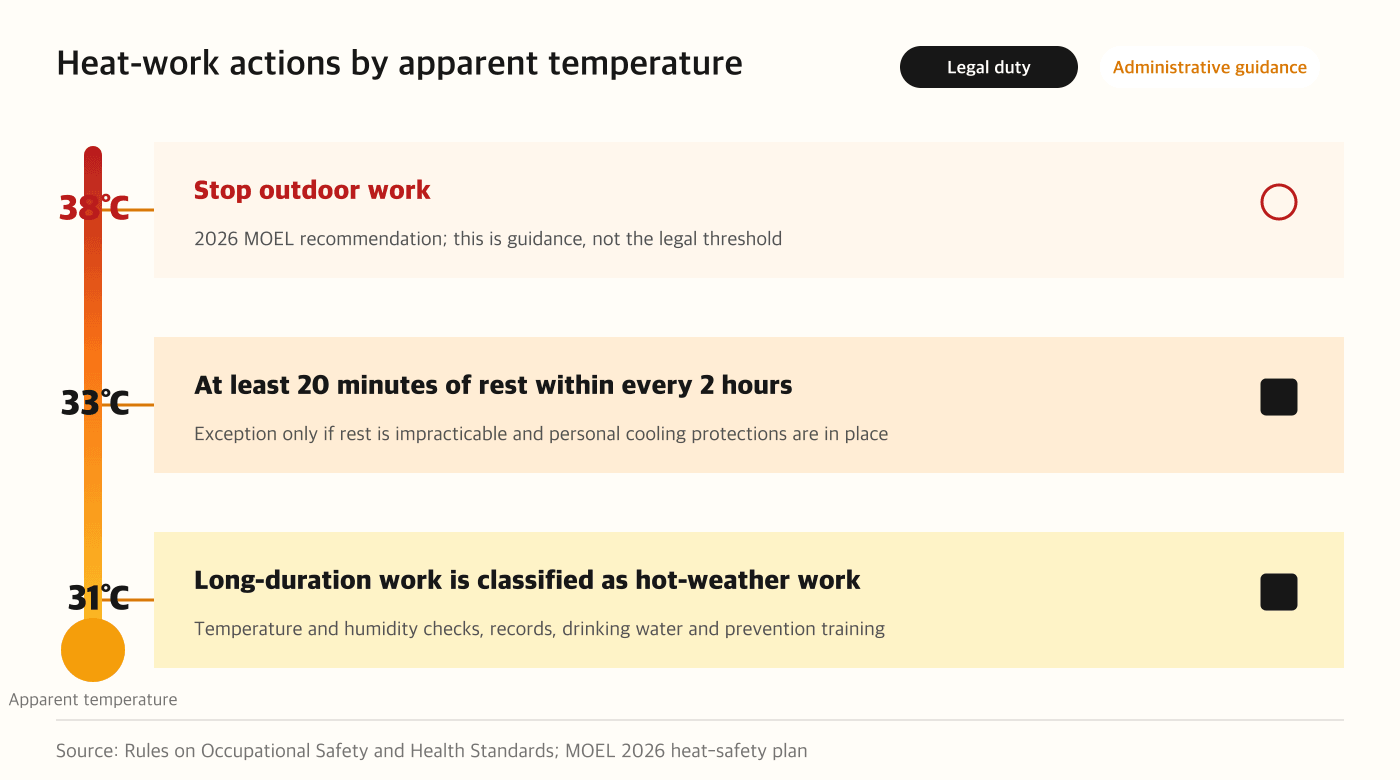
Figure 1. Heat-work actions by apparent temperature. Sources: Rules on Occupational Safety and Health Standards and the Ministry of Employment and Labor 2026 heat-protection plan. The 38°C threshold is guidance, not the statutory break rule.
Application to indoor workplaces
The statutory break rule also applies to long-duration work indoors when temperature and humidity produce an apparent temperature above 33°C.
Include at least 20 minutes of rest within every two-hour period in the work plan so breaks are maintained when the schedule slips. Record the actual break, apparent temperature, and added cooling with the date, time, and work area so the next shift can check prior actions.
Nor can a site cut the break because production is behind. The rule's exception applies only when the nature of the work makes the break genuinely difficult to provide, and even then it requires protections such as personal cooling devices, ventilation, or cooling gear. Adjust sequencing, rotation, and stopping points first; if the exception is used anyway, write down the reason and the substitute protections.
Planning ahead for the 38°C recommendation
The 2026 Ministry plan recommends stopping outdoor work at 38°C or above. Unlike the break duty that starts at 33°C, this is administrative guidance, and it is hard to follow if the decision waits until the reading arrives.
When extreme heat is forecast, identify which tasks will stop and which will continue, then assign the approval owner, alternative schedule, and communication method. Adjust work according to this plan as apparent temperature rises.
Measurement, training, and records
The workplace must be able to check temperature and humidity, and workers need training on heat-illness prevention and emergency response. Record the apparent temperature and the measures actually taken each day, and keep those records through the end of the year.
If a worker shows signs of possible heat illness, remove the worker from the task at once and follow the contact and transport procedure agreed before work started.
Measure temperature and humidity before work and put the breaks in the plan. Record apparent-temperature changes and cooling actions during work. Hand over prior actions and worker condition at shift change, and use the day's record to adjust the next day's sequence and rest plan.
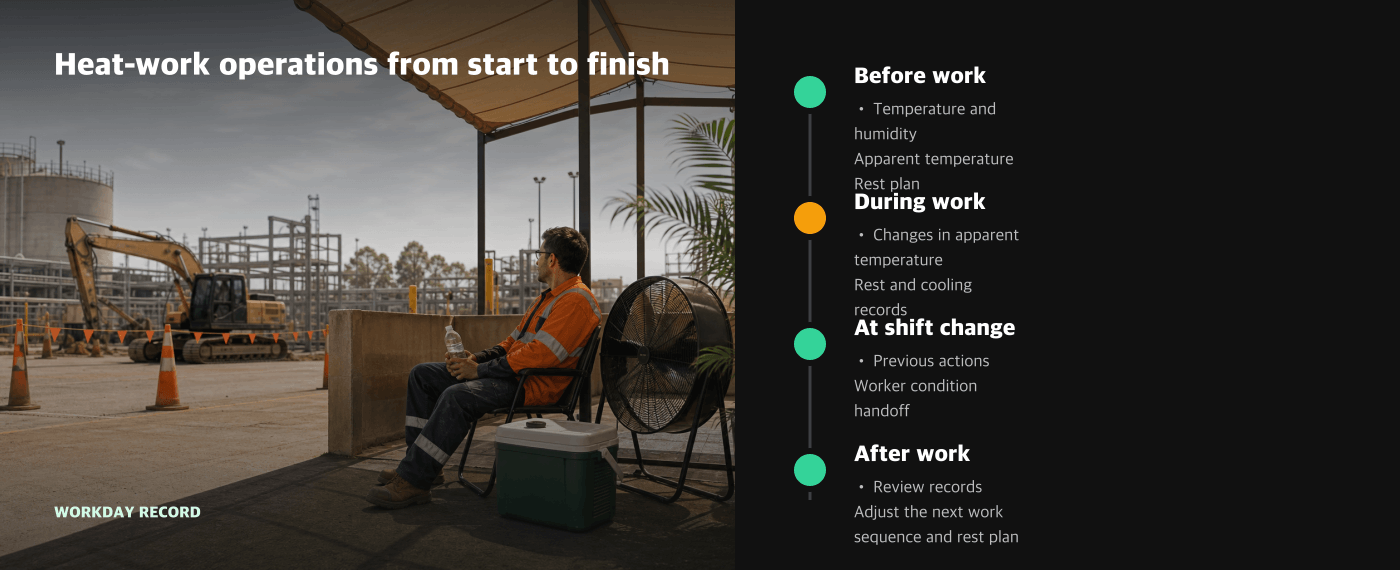
Figure 2. Heat-work operations from pre-work measurement and break planning through field records, shift handoff, and post-work review.
Before the heat arrives
- Confirm temperature and humidity can be measured in each work area, and check the day's apparent temperature before work.
- Define the measures for long-duration work at 31°C or above, and put the 33°C breaks into shifts and schedules in advance.
- Keep drinking water and a rest area where workers can actually reach them.
- Train workers on heat-illness symptoms and emergency steps, and record apparent temperature, breaks, and cooling by date.
- Recheck the 38°C outdoor-stoppage recommendation and current Ministry guidance.
Use daily records to review temperature changes and the effectiveness of measures in each area, then incorporate the findings into next year's heat plan.
Tracking temperature changes by area
Apparent temperature varies across work areas, making continuous manual checks difficult. XyloZero facility monitoring collects acoustic, vibration, and environmental signals on site and shows area-level changes in dashboards and alerts to help determine when to add cooling or adjust work. On-site staff remain responsible for legally required temperature checks, breaks, records, and stoppage decisions.
Official sources
- Heat-work provisions in the Rules on Occupational Safety and Health Standards, Korean Law Information Center
- 2026 worker health protection plan for extreme heat, Ministry of Employment and Labor
Previous guide: Korean Serious Accidents Act: Nine Duties and Enforcement Data
Start of series: 2026 Korean Workplace Safety Law Changes: Dates and Checklist