

Repeat Accidents in Korean Manufacturing: The 2026 Crackdown and What Plants Should Check
Workplace Safety Field Guide special edition: repeat accidents in manufacturing
Korea stepped up enforcement against manufacturers where the same type of accident keeps happening at the same workplace, with a run of government measures in July and August 2026. The Ministry of Employment and Labor (MOEL) said it will closely manage 183 companies with repeated accidents of the same type over the past 10 years, and will run high-intensity inspections on the level of a special inspection if any of them has another serious accident.
This article was written against MOEL press releases (July 3, July 8, July 15, July 21, August 4 and August 18) and the current text of the Occupational Safety and Health Act and its Enforcement Decree on the National Law Information Center, as published as of August 22, 2026.
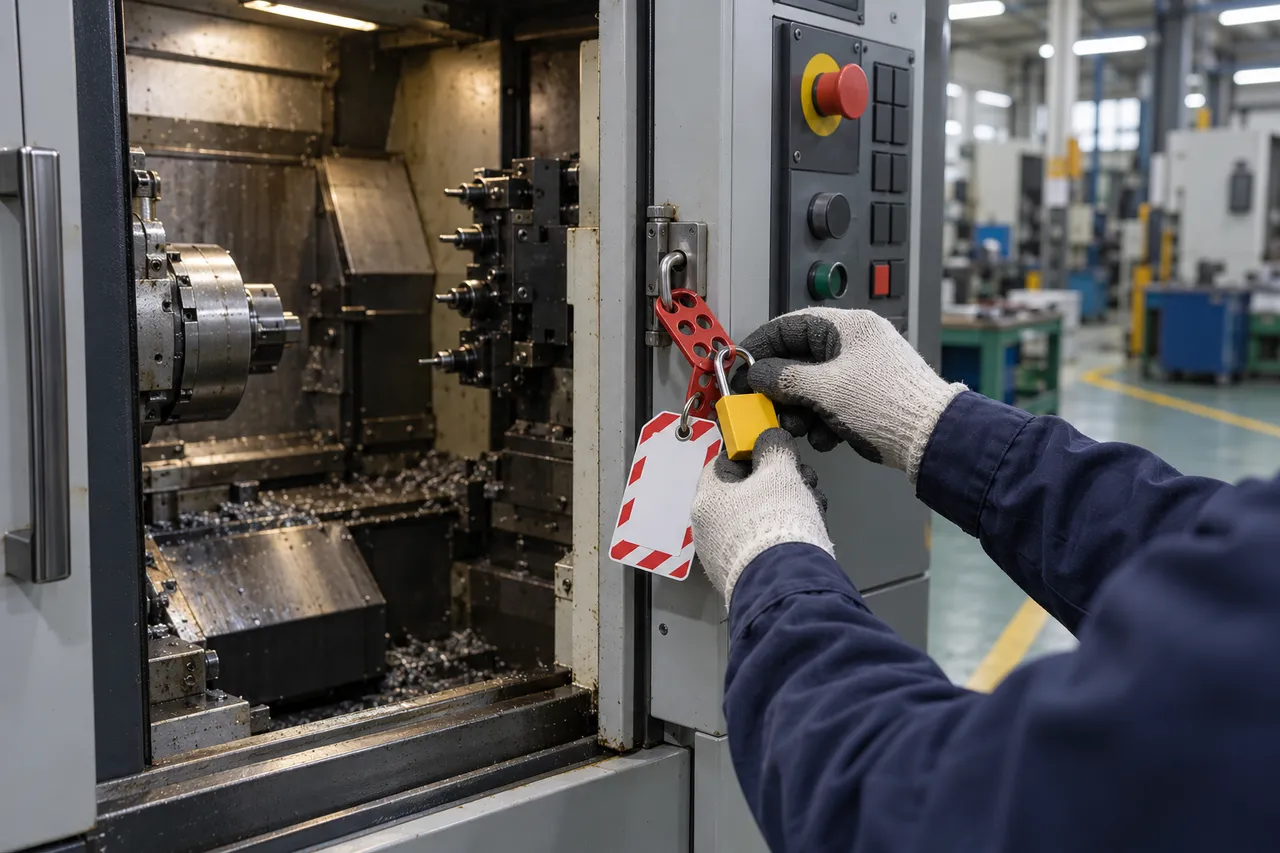
An illustrative image of power isolation and lockout before maintenance. It does not show a real person, a specific workplace, or any accident covered in this article.
June cabinet remarks and July emergency inspections
According to a MOEL press release issued on July 3, the President stressed at cabinet meetings on June 2 and June 23 that "the repeated occurrence of the same type of accident at the same workplace is a serious problem" (MOEL press release). A series of government measures followed through July.
From July 1 to 10, MOEL ran emergency inspections of 1,000 sites, including manufacturing workplaces with repeated caught-in accidents, to check compliance with core safety rules, and said violations would face administrative and judicial action. The inspections used three core rules for preventing caught-in accidents.
- Cut the power and apply locks and tags during maintenance, repair, cleaning and inspection work.
- Do not disable safety devices without authorization.
- Fit guards, fences or other protection over parts where workers can get caught.
On July 3, the Minister of Employment and Labor chaired an emergency meeting at the Seoul Regional Employment and Labor Office. CEOs and other executives of 15 manufacturers with repeated accidents of the same type attended, along with the Ministry of Trade, Industry and Resources and the Ministry of SMEs and Startups. The central message was that cutting the power during maintenance and repair saves lives.
The minister's opening remarks, as printed in the release, described a repeat accident as "clear evidence that the company either failed to build a safety management system or left a known risk unaddressed." The minister also called for more safety investment such as automatic guarding devices, and for workers to take part in risk assessments. The release notes that the remarks as delivered may differ from the printed text.
What the July 8 surprise inspections found
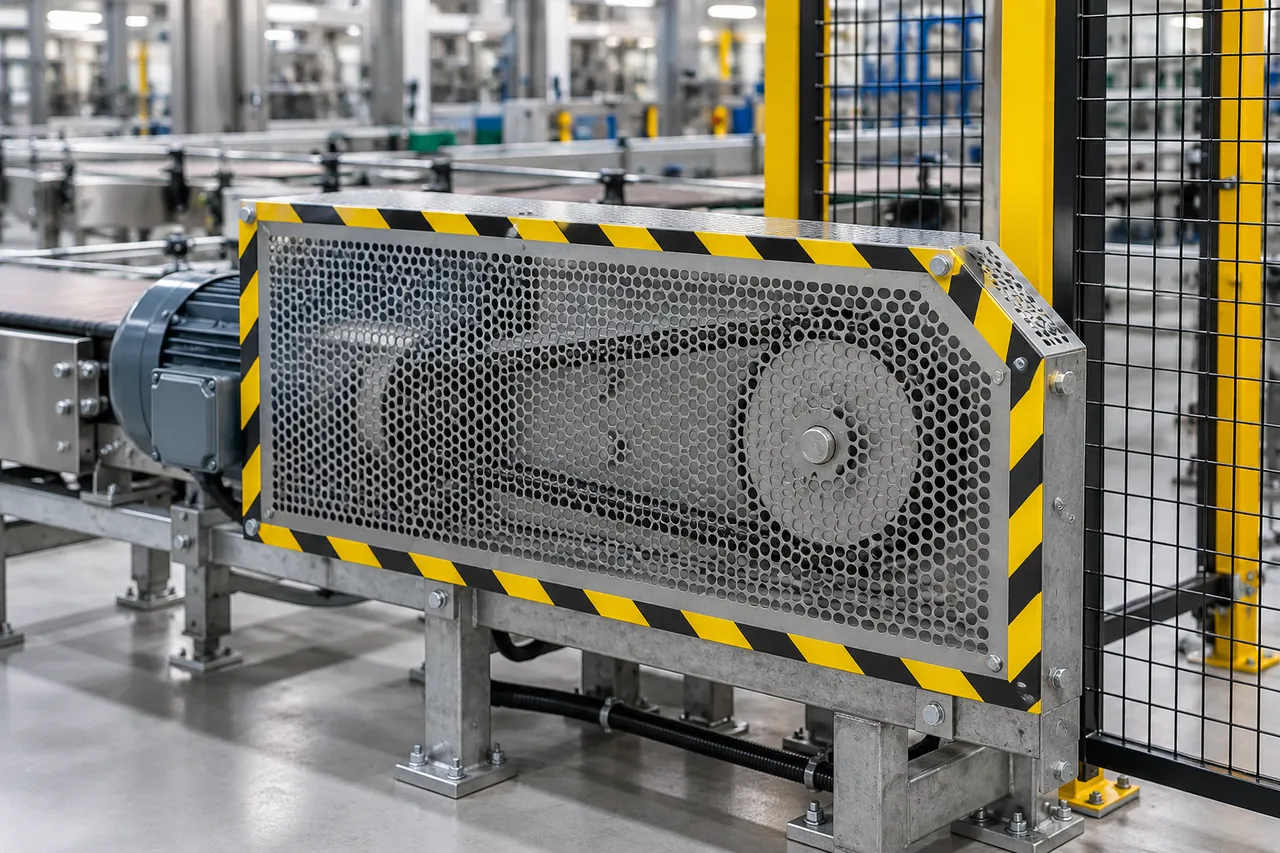
An illustrative image of guards and fencing around a caught-in hazard. It is not a specific workplace or accident site and contains no brands or logos.
On July 8, the minister, heads of regional labor offices nationwide and the Korea Occupational Safety and Health Agency (KOSHA) carried out simultaneous surprise inspections (MOEL press briefing). The sites the minister visited were high-risk workplaces with processes such as melting and pouring, machining, welding and heavy lifting, and a record of repeated accidents of the same type, such as struck-by and caught-in accidents, over the past five years.
Inspectors found a parts machining machine whose interlock did not work when the guard door was opened. They also found damaged fiber rope in use for lifting heavy loads, and a melting and pouring area with no thermo-hygrometer and poorly managed rest facilities, and ordered corrections in each case. According to the same briefing, a public-private joint patrol for the central region was launched in Incheon the same day, sending about 100 inspection staff and 43 patrol cars on surprise inspections.
The minister described repeated accidents of the same type that day not as coincidence but as a sign that the safety management system was not working properly on site. A guard door and interlock that are installed but do not work will not prevent a caught-in accident. The finding shows that what gets inspected is whether a device works, not just whether it is there.
Wider scope for safety and health improvement plans
On July 21, the cabinet approved an amendment to the Enforcement Decree of the Occupational Safety and Health Act. It was promulgated on July 28 as Presidential Decree No. 36540, and most of its provisions took effect on August 1 (MOEL press release). The press release gave August 1 for the improvement plan provisions as well, but the decree's addenda put them (Article 49 item 3-2 and Article 50(2)) into force on the date of promulgation. A new Article 50(2) of the decree adds a new group to the workplaces that can be ordered to draw up a safety and health improvement plan: those where industrial accidents from fire, explosion, collapse or similar causes occurred two or more times within the past year because safety or health measures were not taken.
The legal basis is Article 49(1)3-2 of the Occupational Safety and Health Act, as amended on February 19, 2026. That item makes workplaces with an industrial accident under Article 56(1)2, as further defined by presidential decree, subject to improvement plan orders; Article 50(2) of the decree sets that definition. Article 56(1)2 covers industrial accidents, other than serious accidents, caused by fire, explosion, collapse or similar events, where a cause investigation is deemed necessary to prevent serious accidents, as specified by Ministry ordinance.
The effective date and the accidents covered are two different things. Under Article 3(2) of the Act's addenda, the amended Article 49 and Article 56(1)2 apply to industrial accidents occurring on or after December 1, 2026. The decree provision has been in force since July 28, but the expanded scope does not apply to accidents that occurred before December 1.
The amendment promulgated on February 19, 2026 also added Article 56(2) and (3), in force since June 1. The minister can have KOSHA or outside experts conduct a separate cause investigation, and they can enter the site, interview people and request documents. Damaging the site or obstructing the investigation is prohibited. An improvement plan must go through the occupational safety and health committee, or, where there is no committee, the workers' representative must be consulted (Article 49(2)).
Second-half plan: close management of 183 companies
On August 4, MOEL reported its work plan for the second half of the year (MOEL press release). The 183 companies with repeated accidents of the same type over the past 10 years must each prepare safety measures and have been under close management since July. If any of them has another serious accident, MOEL will run high-intensity inspections on the level of a special inspection. The list of the 183 companies has not been made public.
The plan also set directions by industry. In manufacturing, MOEL will inspect companies with repeated accidents over the past three years and assign dedicated labor inspectors. In construction, it will focus on safety rules against falls and similar accidents. As institutional groundwork, it plans to pursue legal amendments guaranteeing workers' right to avoid danger and right to participate, by December.
The backdrop is a rise in manufacturing deaths. Provisional results released on July 15 put first-half manufacturing accident deaths subject to accident investigation at 92, up 25 from a year earlier (MOEL press release).
High-intensity inspection of a large shipbuilder
From August 18, MOEL began an inspection on the level of a special inspection at a large shipbuilder where two caught-in deaths occurred within one week (MOEL press release). Sixty-two labor inspectors and KOSHA staff were deployed.
The scope goes beyond caught-in hazards. Inspectors are checking core safety rules for struck-by, falls, fire and explosion, and asphyxiation, whether post-accident corrective actions were actually carried out, whether the head office safety and health management system works, and how effective risk assessments are.
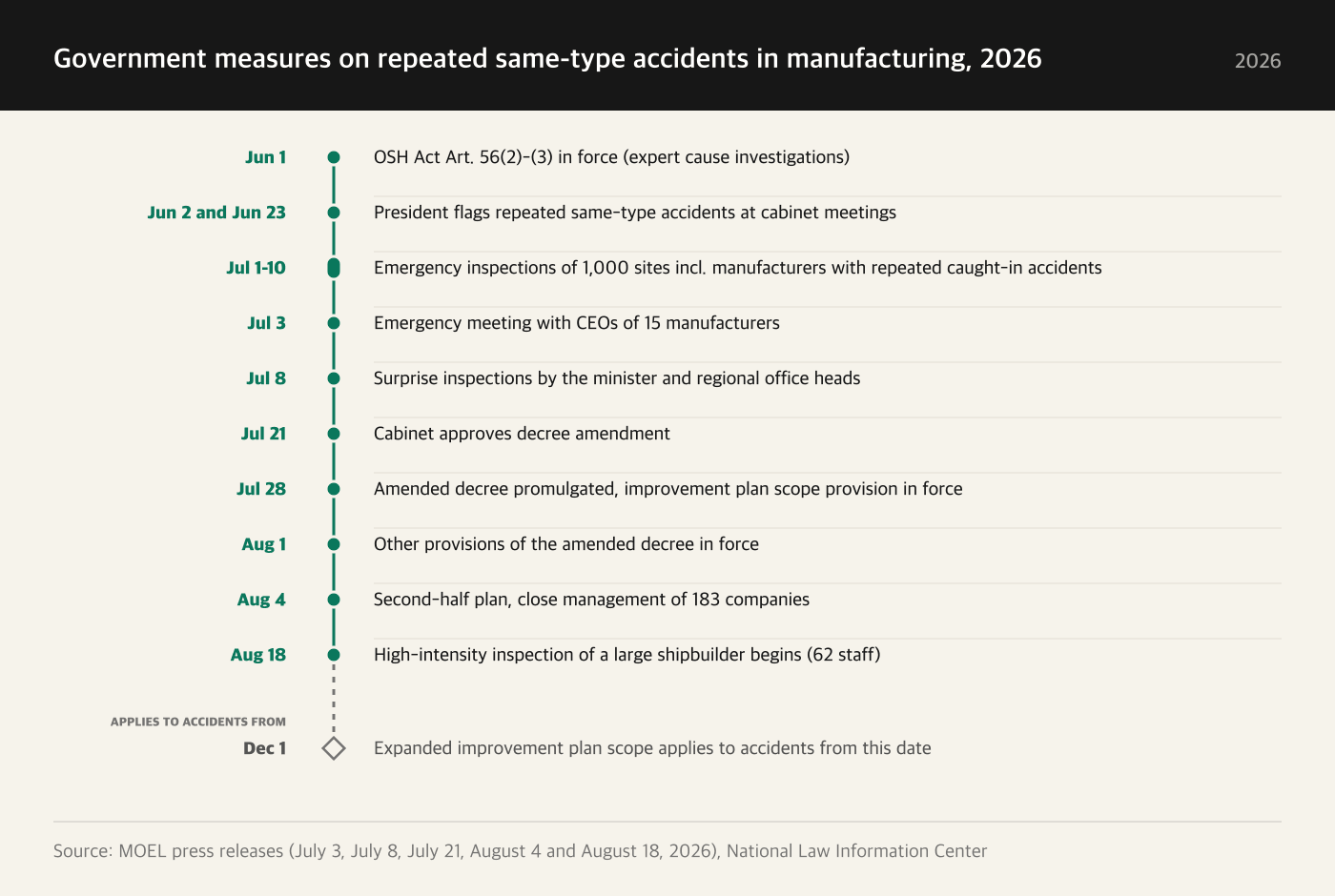
Figure 1. Government measures on repeated same-type accidents in manufacturing, 2026. The dashed line marks the accident date from which the expanded improvement plan scope applies. Source: MOEL press releases (July 3, July 8, July 21, August 4 and August 18, 2026), National Law Information Center.
What the inspections have in common
Taken together, the measures since July check two things. One is whether basic safety measures such as power isolation and lockout, safety devices and guards actually work on site. The interlock failure found on July 8 falls here.
The other is what happens after an accident. The August 18 inspection lists whether post-accident corrective actions were actually carried out and whether the head office safety and health management system works. The wider improvement plan scope and the expert cause investigation provisions also strengthen the process of investigating causes and carrying out fixes after an accident.
Both look at how things are done on site rather than at procedures on paper.
Field checklist
An illustrative image of an inspection record board in a site office. It is not a specific workplace, and the documents on the board are unreadable.
- Write down the power isolation, lockout and tagging procedure for each machine used in maintenance, repair, cleaning and inspection work, and check that it is actually followed on the floor.
- Check that no safety device has been disabled without authorization. On machines with guard doors, test that opening the door stops the machine through the interlock, and record the result.
- Check that guards or fences are fitted over caught-in hazards and are put back in place after maintenance.
- Pull out the list of corrective actions set after past accidents and verify on site that each one was actually completed.
- Check that the workers who do the job take part in the risk assessment for it.
- Keep a record of fire, explosion and collapse accidents. The expanded improvement plan scope applies to accidents occurring on or after December 1, 2026, and an improvement plan must go through the occupational safety and health committee.
- Check lifting gear such as fiber rope for damage, and check thermo-hygrometers and rest facilities in hot work areas.
Summary
Government measures in July and August 2026 converged on manufacturers with repeated accidents of the same type, checking whether basic safety measures work and whether post-accident fixes were carried out. High-intensity inspections are set for any of the 183 companies that has another serious accident, and the wider improvement plan scope applies to fire, explosion and collapse accidents from December 1, so now is the time to confirm that fixes on equipment involved in past accidents are in place. The legal text is available on the National Law Information Center: the Occupational Safety and Health Act and its Enforcement Decree.
Power isolation, lockout and restart procedures are covered in the operations note LOTO before maintenance and cleaning, through restart, and risk assessment with worker participation in the field guide Risk assessment practical guide. The draft subordinate regulations that bring lithium primary battery manufacturing under process safety management are covered in Korea's draft OSH decree.
Official sources
- MOEL, emergency meeting with CEOs of manufacturers with repeated same-type accidents (July 3, 2026)
- MOEL, surprise inspections of workplaces with repeated accidents (July 8, 2026)
- MOEL, provisional H1 2026 results on investigated fatal workplace accidents (July 15, 2026)
- MOEL, cabinet approval of the OSH Act Enforcement Decree amendment (July 21, 2026)
- MOEL, second-half 2026 work plan (August 4, 2026)
- MOEL, high-intensity inspection of a large shipbuilder (August 18, 2026)
- National Law Information Center, Occupational Safety and Health Act
- National Law Information Center, Enforcement Decree of the Occupational Safety and Health Act