

Korean Risk Assessment in 5 Steps: 2026 Practical Guide
Workplace Safety Field Guide 2 of 4: risk assessment and continuous review
When an operator reports an unusual sound from rotating equipment, the team needs to check the work scope and current controls. The five stages of a Korean workplace risk assessment are preparation, hazard identification, risk determination, control planning and implementation, and recording and communication. Worker participation and communication of results have had stronger statutory requirements since June 1, 2026. Records must show who took part, what was done, and how the results were shared.
This guide was reviewed against the laws and notices in force as of July 12, 2026. It explains Article 36 of the Occupational Safety and Health Act and the Ministry of Employment and Labor risk assessment guidance. Apply the current notice and workplace procedures to each operation.
Checks at each stage
| Stage | Key question | Evidence to retain |
|---|---|---|
| 1. Preparation | Which process and task are in scope? | Scope, owners, schedule, and criteria |
| 2. Hazard identification | Who could be harmed, and by what? | Walkthroughs, worker input, accident and near-miss data |
| 3. Risk determination | Is the risk tolerable with current controls? | Decision criteria and priorities |
| 4. Control and implementation | Were elimination, substitution, and engineering controls considered first? | Owner, due date, and completion result |
| 5. Record and communicate | Is the action complete, and do workers know the residual risk? | Verification, training, toolbox talks, postings, or electronic notice |
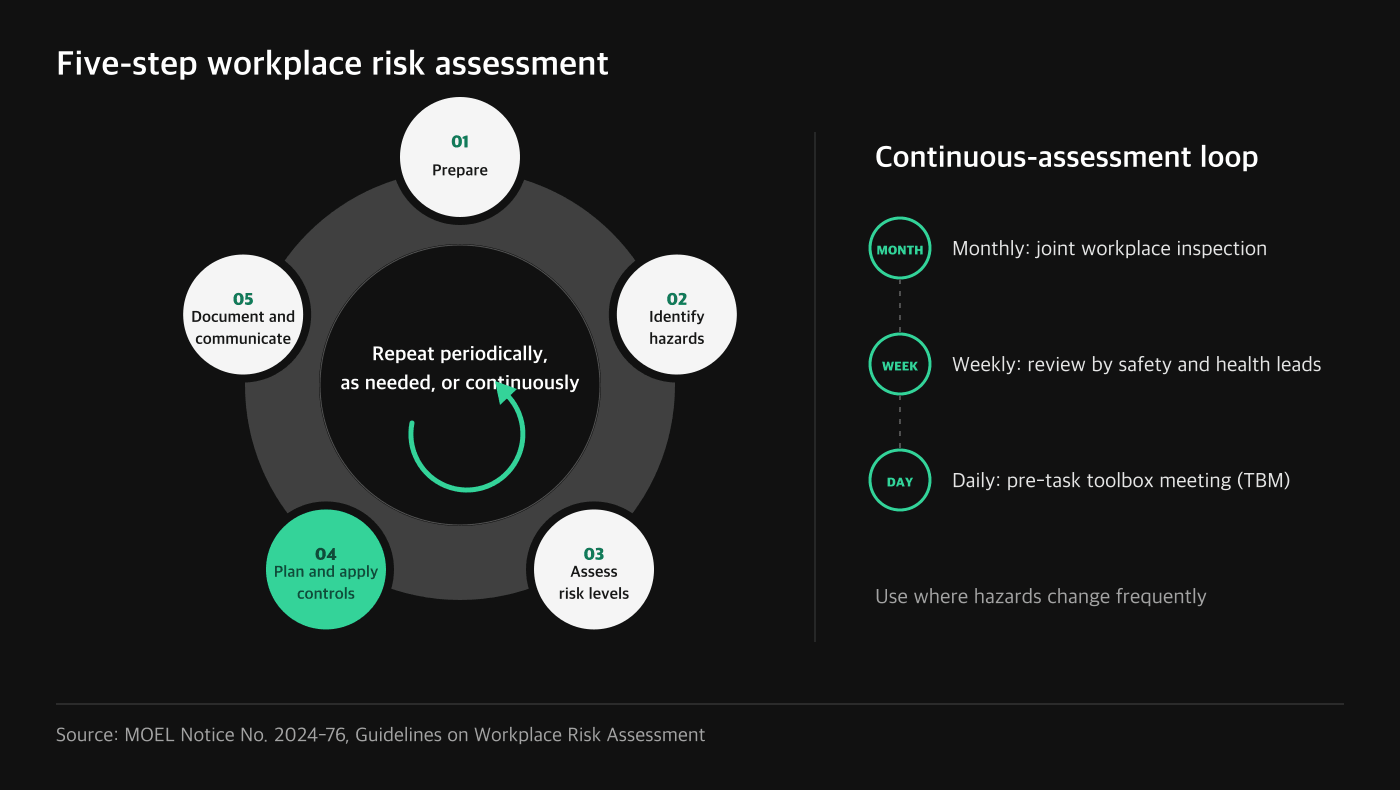
Figure 1. Five risk assessment stages connected to monthly, weekly, and daily review. Source: Ministry of Employment and Labor risk assessment guide and official notice.
Assessment of a hypothetical unusual-sound report
Define the task and inspection boundary first. The operator and maintenance worker then examine when the sound occurs, the condition of guards, access during operation, and potential entanglement or crushing hazards. Apply the workplace decision criteria, assign controls such as stopping and isolating the equipment, qualified inspection, or guarding, and set the restart conditions. Before work resumes, tell the crew what risk remains.
The signal is an input to hazard identification, not the assessment itself. Risk determination, control implementation, verification, and worker communication still have to follow.
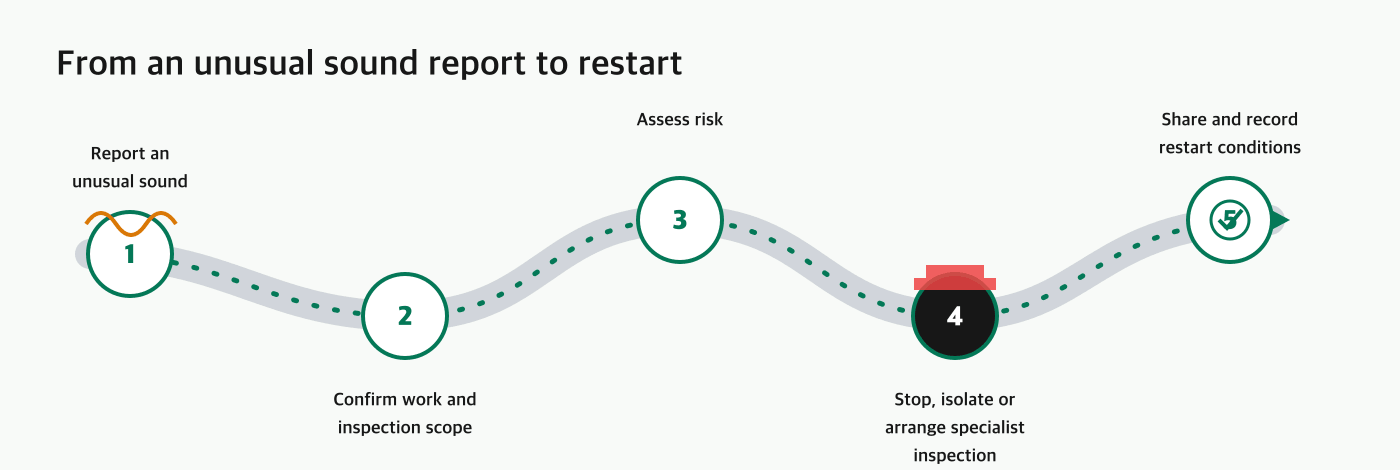
Figure 2. A worked flow from an unusual-sound report through scope confirmation, risk assessment, controls, and restart records.
Continuous review: month, week, day
Workplaces with frequently changing hazards can run a continuous assessment instead. Ministry guidance connects a monthly joint labor-management walkthrough, a weekly safety discussion, and a daily pre-work toolbox meeting.
- Monthly: review the full workplace, new hazards, and incomplete controls.
- Weekly: fold in process changes and planned work, then reset priorities.
- Daily: communicate the hazards and controls for the work about to start.
This is not the same form produced every day. Monthly findings shape weekly coordination and daily work instructions, and field observations feed the next review.
Five failure points, five fixes
- A manager completes the assessment alone. Involve the workers who know the task in identifying hazards and reviewing controls.
- Hazards get listed and nothing else. Give every control an owner and a due date.
- Equipment or the process changes while the old assessment stays on file. Reassess whatever changed.
- Nobody verifies completion. Recheck residual risk after controls go in, and record the result.
- Results are recorded but not shared. Communicate the outcome and pre-work precautions to workers; participation and communication are part of the statutory duty now.
Include non-routine work such as maintenance, cleaning, and restart in the scope. Set the risk decision criteria before assessing, and consider elimination and substitution before personal protective equipment.
Start the next assessment with incomplete actions and newly identified hazards in the previous records. The accumulated records document each process's hazard history and the participation required by the June revision.
When the first clue is a sound
Acoustic and vibration data can support hazard identification alongside worker reports. Motor Sound Diagnostics analyzes condition signals from motors, reducers, and other rotating equipment and flags anomalies to help define inspection scope and targets. On-site teams remain responsible for risk determination, controls, and worker participation.
Official sources
- Article 36 risk assessment, Korean Law Information Center
- Workplace Risk Assessment Guidelines, Korean Law Information Center
- New Risk Assessment Guide, Ministry of Employment and Labor
Previous guide: 2026 Korean Workplace Safety Law Changes: Dates and Checklist
Next guide: Korean Serious Accidents Act: Nine Duties and Enforcement Data