

Korea's H1 2026 Workplace Fatalities: Falls Down, Fires and Explosions Up
Workplace Safety Field Guide special edition: H1 2026 fatality statistics
Korea recorded 253 investigated workplace accident deaths in the first half of 2026, down 34 (11.8%) from the same period a year earlier. Construction and fall deaths dropped sharply, but manufacturing deaths rose and so did deaths from fires and explosions. That is the core of the Ministry of Employment and Labor's provisional results.
This article was written against the MOEL provisional results on investigated fatal workplace accidents for the first half of 2026 (released July 15), as published as of September 5, 2026. The figures are provisional and use a different basis from the annual official industrial accident statistics, which count approved workers' compensation claims.
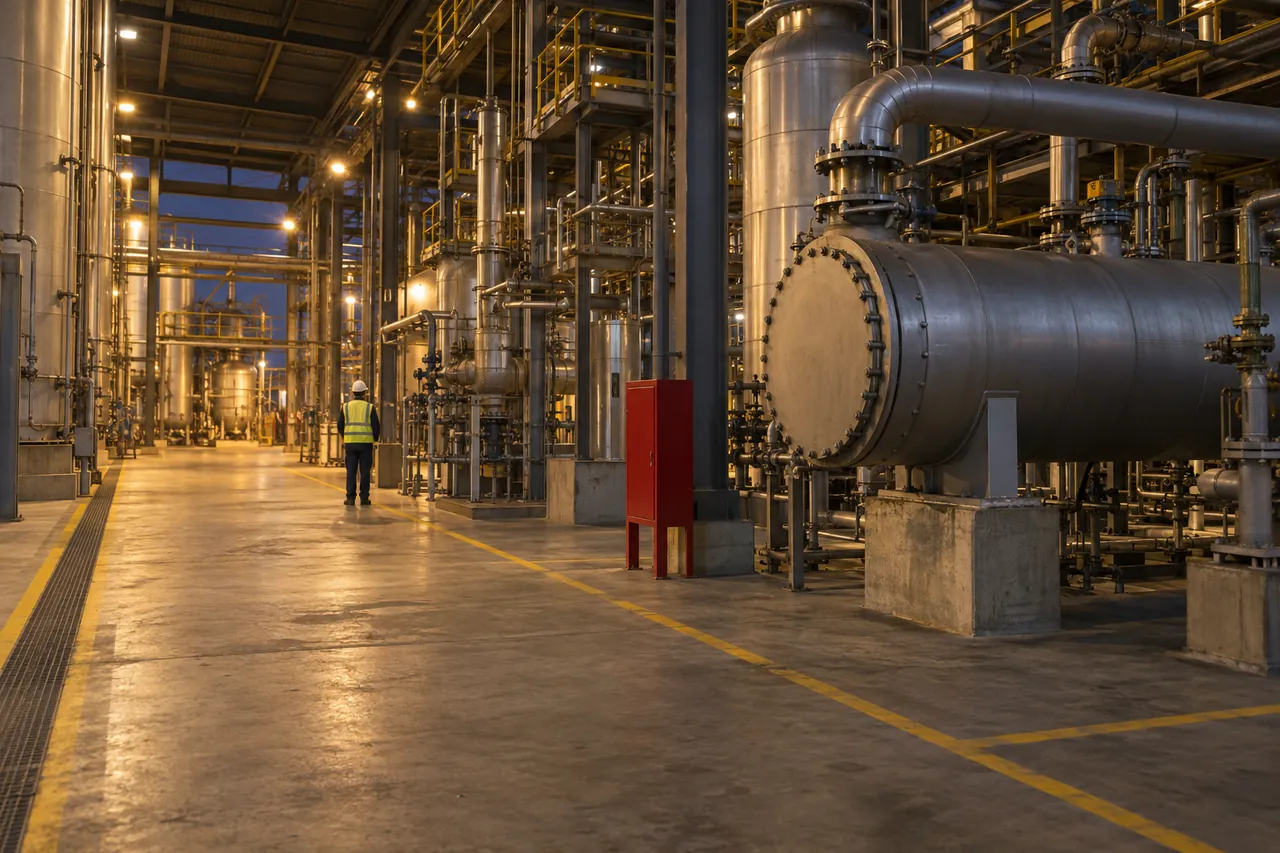
An illustrative image of a safety check in a manufacturing process area. It does not show any accident covered in this article or any specific workplace.
First-half deaths hit the lowest level since the series began
In the provisional results the ministry released on July 15, first-half accident deaths came to 253 (232 incidents). That is 34 fewer deaths and 46 fewer incidents (16.5%) than the 287 deaths (278 incidents) a year earlier, and the lowest first-half figure since the statistics were first compiled in 2022 (MOEL press release).
On the same basis, 2025 recorded 605 accident deaths (573 incidents) for the full year (MOEL press release). The full-year trend for 2026 will only be clear once second-half results are out.
By industry: construction down, manufacturing the only rise
| Segment | Deaths | Incidents | Change vs. H1 2025 |
|---|---|---|---|
| Total | 253 | 232 | Down 34 (11.8%) |
| Construction | 105 | 103 | Down 33 (23.9%) |
| Manufacturing | 92 | 75 | Up 25 (37.3%) |
| Other industries | 56 | 54 | Down 26 (31.7%) |
| Under 50 workers | 146 | 144 | Down 30 (17.0%) |
| Under 5 workers (within under 50) | 67 | 67 | Down 21 (23.9%) |
| 50 or more workers | 107 | 88 | Down 4 (3.6%) |
Source: MOEL (July 15, 2026, provisional). For construction, projects under KRW 5 billion are counted as under 50 workers.
Manufacturing deaths rose from 67 a year earlier to 92. The ministry attributed the increase to the impact of large fires and explosions, among other factors, and to more accident deaths at workplaces with 50 or more workers.
By size, deaths at workplaces with under 50 workers fell 17.0%, while those at workplaces with 50 or more fell only 3.6%.
By accident type: falls down, fires and explosions up
Fall deaths dropped by 45 (34.9%), the largest decline of any accident type. Caught-in, struck-by, and asphyxiation and poisoning deaths also fell. Fire and explosion deaths, by contrast, increased.
According to press coverage, large fires and explosions at workplaces in Daejeon in March and June contributed to the manufacturing increase (Etoday). For per-type death counts, the statistical annex attached to the release is the accurate source.
Analysis: fall prevention and fire and explosion prevention are different work
Falls are prevented with equipment and rules around the worker: guardrails, work platforms, and harnesses. Fires and explosions arise when equipment condition, flammable material handling, and process conditions line up, and a single event can kill several people. Manufacturing's 92 deaths came from 75 incidents, which means some incidents killed more than one person.
That is why checking protective gear and work rules alone does little against these accidents. Equipment inspection records, hot work control, and material storage need to sit on the same inspection list.
Government enforcement in the second half
For falls, the ministry said it will expand technical and financial support before work begins and take administrative and judicial action when it finds safety rule violations. It also deploys its safe workplace guardian program.
The ministry said it would inspect workplaces with repeated fires from July and run focused inspections on the three core safety rules for preventing asphyxiation in confined spaces. Check the release itself for the scale of inspections and detailed criteria.
A bill amending the Occupational Safety and Health Act to impose fines tied to operating profit on companies with repeated fatal accidents was reported in mid-August as still pending before the National Assembly plenary session (Etoday). Whether it passes, and when it would take effect, depends on how the bill is handled.
Field checklist
- List the equipment with fire or explosion risk and where flammable materials are stored, and assign an owner to each item.
- Before hot work such as welding or cutting, confirm the permit and clear nearby combustibles.
- For equipment or areas that have had fires before, confirm the root-cause fixes were actually completed. The ministry said it would inspect workplaces with repeated fires from July.
- Compare your confined-space procedure with the three core safety rules the government set out, and add any missing items to the pre-work checklist.
- Keep equipment inspection results and warning-sign records in one place so every shift sees the same information.
- Keep inspecting openings, work platforms, and harness anchor points on the existing schedule so the decline in falls continues.
Summary
The H1 2026 statistics point two ways at once: total accident deaths and falls went down, while manufacturing and fire and explosion deaths went up. With inspections of repeat-fire workplaces running from July and focused confined-space inspections announced, now is the time to review your equipment and process risk list and record what was fixed. The release and its statistical annex are available from MOEL.
Equipment problems can develop between scheduled inspections. Tools that continuously track equipment condition through sound, vibration, and environmental signals, such as XyloZero, can serve as a record that complements those inspections.
Fall prevention is covered in the field-guide special edition Preventing Falls on Korean Construction Sites: 2025 Data and the First Ruling.